Swipe Right to Get In: How Apps, Bots, and Telegram Channels Ate NYC's Door Culture
There's a particular humiliation that anyone who's spent real time in NYC nightlife knows intimately. You're standing outside a club on a cold Tuesday in February, your breath visible, your confidence eroding by the second, while a guy in a puffer vest stares through you like you're a smudge on a window. He checks a clipboard. He doesn't check it again. He just... doesn't let you in. No explanation. No appeal. You walk away.
That guy is disappearing. And what's replacing him is somehow both more democratic and more ruthless at the same time.
The New Architecture of Access
Over the past three years, a quiet infrastructure revolution has reshaped how New Yorkers get into the rooms that matter. Membership apps like Tock, Luma, and a handful of invite-only platforms have colonized the entry process for everything from warehouse raves in Bushwick to rooftop events in Tribeca. AI-assisted waitlists now parse your social media presence, your follower engagement rate, even your Spotify listening history to determine whether you'd be a good "fit" for a given event.
Fit. That word does a lot of work in this new world.
Telegram channels have become the underground railroad of nightlife access — anonymous, fast-moving, and deeply tribal. A single channel moderator can decide which 200 people get the location drop for a Friday night event in Red Hook. That moderator might be a 24-year-old in Bed-Stuy who's never worked a door in their life, or they might be a veteran promoter who's simply moved their operation off Instagram and into encrypted messaging. Either way, they've inherited the power that used to live in the guy with the clipboard.
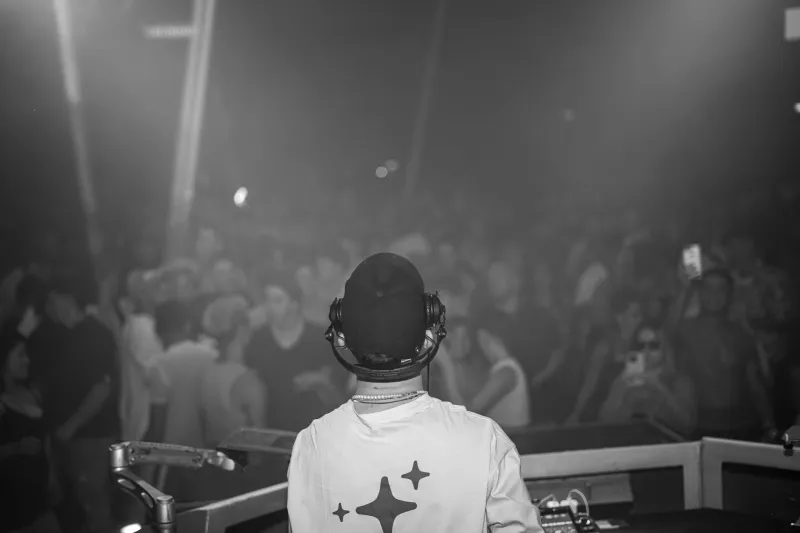
"The clipboard was at least visible," says one Brooklyn-based DJ who asked to remain anonymous. "You could see the process happening in real time. Now I watch people get rejected from events they applied for weeks in advance and they have no idea why. There's no face to argue with."
Nostalgia for the Velvet Rope (Seriously)
It sounds absurd to romanticize a system that was famously racist, classist, and arbitrary. The old NYC door culture was genuinely brutal — Black and brown partygoers were turned away from spaces that would've welcomed a mediocre white guy in a blazer without a second glance. Women were subjected to looks that had nothing to do with the guest list. The clipboard was never neutral.
But there's a growing contingent of nightlife veterans who argue that at least the old system had a human being at its center — someone who could be argued with, charmed, or occasionally shamed into decency. The algorithm offers none of that. It simply outputs a decision and moves on.
Marco Reyes, a promoter who's worked events in the Meatpacking District and Williamsburg for over a decade, describes the shift with visible frustration. "Before, a good door person knew how to read energy. They knew who was gonna bring the room alive and who was gonna kill it. Now you've got an app that's essentially ranking people by their online clout and calling that curation. It's not curation. It's just a different kind of gatekeeping with better PR."
Who Actually Benefits?
The platforms selling this technology love to use the word democratization. And in certain narrow ways, they're not entirely wrong. Digital waitlists have made it easier for people outside the traditional nightlife social network — newcomers to the city, introverts who don't know the right promoters — to access events they'd never have heard about otherwise. Telegram channels have given underground scenes in Queens and the Bronx a distribution channel that didn't exist five years ago.
But democratization has limits when the underlying algorithm is trained on social metrics that already reflect existing hierarchies. If your follower count and engagement rate determine your access, then the system is just replicating the same stratifications that existed before — it's just doing it faster and with less accountability.
There's also the question of who owns the data. When you submit your Instagram handle, your email, and your Spotify profile to an AI-assisted waitlist, you're handing over a detailed portrait of your cultural consumption to a private company whose business model you may not fully understand. The velvet rope never asked for your data. It just asked for your vibe.
Where the Underground Actually Lives Now
Here's what's genuinely interesting: the most vital nightlife spaces in New York right now are largely invisible to this entire ecosystem. The best parties happening in the city this year aren't on Luma. They're not on any app. They're word-of-mouth in the truest sense — a text from someone you trust, a mention at the end of a conversation you almost didn't have.
The digital gatekeeping apparatus, for all its sophistication, has created an enormous amount of noise. And in that noise, a quieter, more human underground has found room to breathe. The algorithm can't find what doesn't want to be found.
Maybe that's the real legacy of the velvet rope's death: the most exclusive access in New York City now belongs to people who've opted out of the system entirely. No app required. Just know somebody who knows somebody who actually cares about the music.
Some things really don't change.