One Night Only, Forever: Why NYC Venues Stopped Believing in Their Own DJs
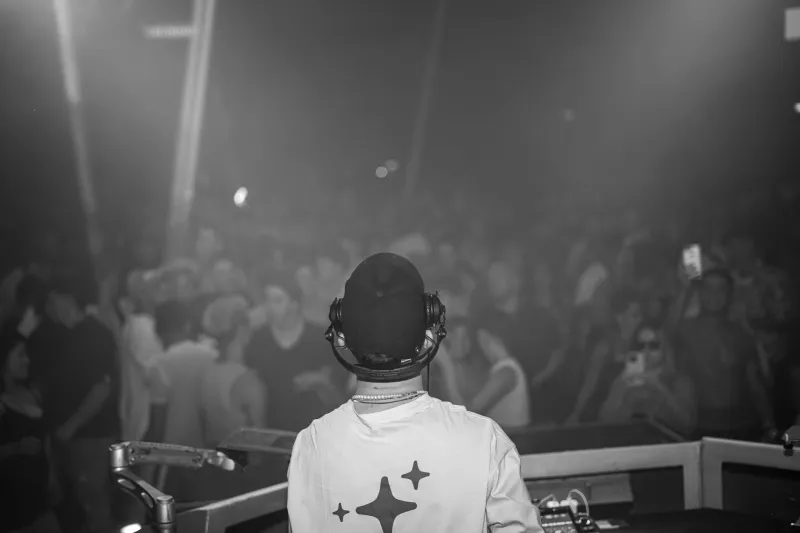
Ask anyone who was hitting clubs in New York in the late '90s or early 2000s about their favorite nights and they'll almost always describe a relationship. Not just a DJ they liked, but a specific night at a specific venue where the same person held down the room week after week until the music and the space became inseparable. Junior Vasquez at Sound Factory. François K at Body & Soul. Louie Vega at Cielo. These weren't just bookings — they were institutions.
Now ask a club promoter in 2025 how long a DJ can realistically hold a residency at a major NYC venue before the bookings dry up.
The answer, if they're being honest, is depressing.
The Attention Economy Hits the DJ Booth
"Three months is now considered a long run," says DJ and producer Kezia Oduya, who has played rooms across Brooklyn and lower Manhattan for the better part of a decade. "I had a residency that was genuinely building something — the crowd was growing, people were coming back every time, the energy in the room was evolving. And then the venue told me they needed to 'refresh the programming.' Three months in."
What she's describing isn't an isolated experience. Across New York's nightlife landscape, a structural shift has taken hold that's fundamentally reordering the relationship between venues, artists, and audiences. The logic is simple and brutal: in an era where nightlife discovery happens primarily through Instagram and TikTok, a recurring DJ night doesn't generate the same content momentum as a constantly rotating lineup of new names. Familiar faces don't make for shareable announcements. Novelty does.
Venues have responded accordingly, treating their DJ programming less like a curatorial vision and more like a content calendar.
What Venues Say (And What They Mean)
Get a club booker on the record and the language is always carefully diplomatic. They'll talk about "keeping things fresh" and "responding to audience demand" and "giving emerging artists a platform." These aren't entirely dishonest framings — there's genuine pressure from audiences who've grown up in an era of infinite content and developed correspondingly short entertainment attention spans.
But off the record, the conversation gets more direct. One booker at a mid-size Williamsburg venue, who asked not to be named, put it plainly: "Every time we announce a new DJ, we get a spike in ticket pre-sales and a bump in social engagement. Every time we announce the same DJ for the fourth month in a row, the numbers are flat. The math isn't complicated."
The math, however, is missing something.
The Thing You Can't Measure
What the engagement metrics don't capture is the specific, irreplaceable energy of a room that has found itself — where a DJ and a crowd have developed a shared language over months of repetition, where the regulars know the arc of the night before it begins and love it anyway, where the music has accumulated meaning through accumulated time.
This is what residencies actually build. Not just familiarity, but trust. A room where the DJ trusts the crowd enough to take risks, and the crowd trusts the DJ enough to follow them somewhere unfamiliar. That kind of relationship takes months to develop and produces nights that people remember for years.
Veteran promoter Darnell Hughes, who has been running events in the city since the mid-2000s, describes the loss in almost architectural terms. "A residency is how a room gets a soul. The DJ learns the acoustics, learns the crowd, learns which records work at 1 AM versus 3 AM in that specific space. You strip that out and replace it with a different person every week, you've got a technically functional club with no identity. People feel that, even if they can't articulate it."
The Touring Artist Problem
The rotation culture has also created a perverse incentive structure that disadvantages local and regional DJs in favor of international touring artists. A DJ flying in from Berlin or London carries the social media weight of novelty and a built-in narrative — they're here for one night only, better not miss it. A Brooklyn-based DJ who's been developing their sound in the city for years doesn't generate that same urgency, even if they're objectively a better fit for the room.
The result is a nightlife ecosystem that increasingly exports its economic opportunity to artists who are passing through, while the local talent that actually builds scenes struggles to get consistent work in their own city.
"I've watched people who've been grinding in New York for years get passed over for bookings because a venue would rather announce someone with a hundred thousand Instagram followers who's never played the city before," says Oduya. "It's not about the music anymore. It's about the announcement."
Is Anyone Fighting Back?
Some venues are. A handful of smaller, more ideologically committed spaces in Brooklyn and Queens have explicitly committed to longer artist relationships, treating the residency model as both a curatorial stance and a community-building strategy. These rooms tend to be smaller, less financially pressured, and more insulated from the metrics-driven logic that governs larger venues.
But they're operating against the current. As long as Instagram drives nightlife discovery and ticket sales, the incentive to prioritize novelty over depth will remain overwhelming.
The DJ booth used to be where legacies were built, one Saturday night at a time. Now it's where content gets produced before the next announcement goes out. The city's nightlife is louder than ever — and somehow harder to remember.