What the Doorman Sees That You Never Will
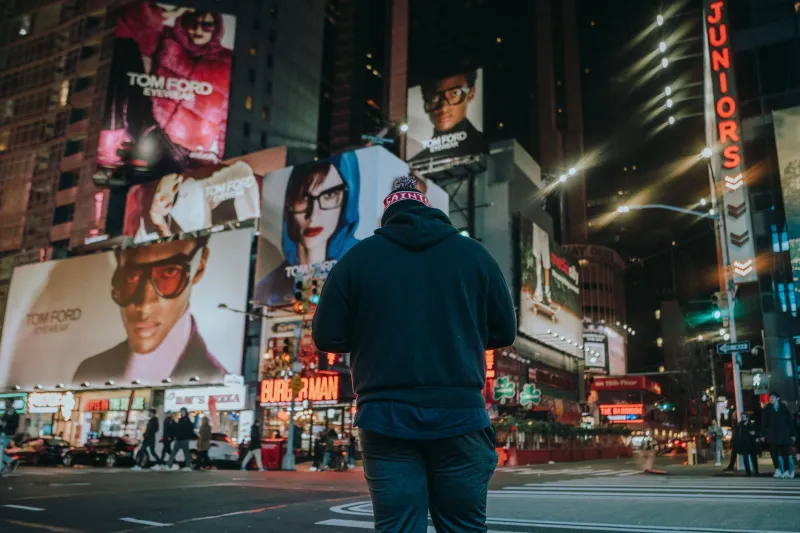
There's a moment — brief, almost imperceptible — that happens every single night at the entrance of every serious club in New York City. A person walks up. The door guy looks at them. Something passes between them that isn't quite language. And then a decision gets made.
You never see the calculus. You only see the result.
The bouncers, security leads, and head door staff working NYC's most iconic venues are, by almost any measure, the most consequential employees in the building. More than the DJ. More than the owner. More than the bartender who makes your drink. They are the first and final filter between the street and the dance floor — and the ones who spend the entire night holding the room together at the seams.
We talked to a handful of them. What they described wasn't muscle work. It was something much closer to art.
The Read Happens Before You Open Your Mouth
Marcus, who's worked the door at several of Brooklyn's most celebrated underground venues for going on twelve years, says the assessment begins the moment someone rounds the corner.
"I'm watching the walk," he says. "Not the clothes, not the face — the walk. Are you moving with intention? Are you already arguing with someone in your group before you even get to me? Are you looking around nervously or are you just... here?"
It's a posture read, essentially. A behavioral scan conducted in under four seconds that most people don't even realize is happening. Marcus isn't looking for trouble per se — he's looking for the energy someone is carrying into the space. There's a difference, he insists, between someone who's excited and someone who's wound up. Between someone who's had a couple drinks and someone who's already past the point of a good night.
"People think I'm judging them on looks," he adds. "I'm judging them on intention. And intention has a body language."
That distinction matters enormously in a city where door policy has long been weaponized as a tool of exclusion. The best security staff in NYC are acutely aware of the history — of the velvet rope as a class and race instrument — and many of them work actively against that legacy, even as they do their jobs.
Crowd Alchemy
What most club-goers don't understand is that the door isn't just about keeping certain people out. It's about curating the room. Every person allowed in changes the molecular composition of the space. Add too many aggressive energies too quickly, and the vibe curdles. Let in a group that's clearly looking for a fight, and the whole night shifts its center of gravity toward tension.
Deanna, who's spent seven years as head of security at a prominent Manhattan club that regularly books internationally recognized DJs, describes her job as something like "mood architecture."
"I think about the room I'm building," she explains. "It's not a wall, it's a garden. You're tending it all night. Who's coming in at 10 PM is different from who you're letting in at 1 AM. The crowd has a temperature. My job is to keep it in range."
That temperature management extends well past the entrance. The best security staff are constantly moving through the room, not just stationed at choke points. They're reading micro-expressions, noticing when two groups are starting to orbit each other in a way that looks less like dancing and more like circling. They're clocking the guy at the bar who's had one too many and needs to be redirected before he becomes everyone's problem.
It's reactive and predictive simultaneously. The goal isn't to wait for something to go wrong — it's to prevent the conditions that allow things to go wrong from forming in the first place.
The Nights Nobody Talks About
Every veteran door person has a story about the night that could have gone sideways and didn't. They rarely get credit for those nights, because the whole point is that nothing happened.
"The best nights I've ever worked," Marcus says, "nobody remembers me. The music was great, everyone had a good time, they went home safe. That's a win. The nights people remember the security team are the bad ones."
There's something quietly profound about that. The invisible labor of de-escalation — the hand on a shoulder, the quiet word, the gentle redirect before a confrontation crystallizes — is perhaps the most undervalued skill in NYC nightlife. It requires emotional intelligence, physical presence, cultural fluency, and an almost preternatural calm under pressure.
Deanna describes one night when she spotted a situation developing near the DJ booth — a group of guys whose body language had shifted from celebratory to territorial. "I didn't wait. I walked over, introduced myself, told them the DJ was about to drop something they didn't want to miss, and basically moved the whole energy of that corner before anyone even knew there was a thing."
The DJ dropped. The corner danced. Nobody went home early.
Respect Is the Real Currency
Ask any experienced door person what separates the venues that feel genuinely safe from the ones that feel just technically secure, and they'll give you some version of the same answer: culture starts at the door.
When security staff are treated as partners in the experience rather than hired muscle, when they're briefed on the night's lineup and crowd expectations, when they're empowered to make judgment calls without constant management override — the whole room feels different. Patrons pick up on it, even if they can't articulate why.
"People feel safe when they feel seen," Deanna says. "Not surveilled. Seen. There's a difference. When I greet someone and they feel like I'm genuinely happy they're here, they relax. And a relaxed crowd is a safe crowd."
In a city that never stops auditioning its own nightlife mythology, the people standing at the threshold are doing something more than checking IDs and counting capacity. They're setting the emotional key for the entire night. They're the first note of the song.
Next time you walk into a room that feels immediately, inexplicably right — where the energy is warm and the air feels like possibility — take a half second to look back at the door.
Somebody built that for you.