Bottles, Tables, and the Architecture of Aspiration: How NYC Clubs Monetized the Dream of Being Seen

Let's be honest about what's actually happening when someone drops $800 on a bottle of Patrón at a Meatpacking District club on a Saturday night. They are not buying tequila. Tequila is $45 at the liquor store three blocks away. What they're buying is geography — a specific rectangle of real estate inside a room where geography is the entire point. The bottle is a deed. The table is a plot of land. And the city that invented the concept of paying rent for the privilege of existing? Well, of course New York took this and ran.
Bottle service as we know it didn't originate in Manhattan. Most industry historians trace its American ascent to Las Vegas in the late '90s, where clubs like Rain and Pure figured out that high-rollers who'd just dropped thousands at the blackjack table needed somewhere to keep the momentum going. The math was simple: give them a reserved space, a dedicated server, and the visual shorthand of a lit-up bottle parade, and they'll pay almost anything to maintain the feeling that they matter more than the people standing at the bar.
New York absorbed that model and mutated it into something far more culturally loaded.
From Vegas Import to NYC Status Ritual
"Vegas bottle service was always transactional and everyone knew it," says one Manhattan hospitality consultant who's helped open more than a dozen clubs over the past two decades and asked not to be named. "New York made it aspirational. The city has this mythology around itself — this idea that if you're in the right room, the right things happen to you. Clubs plugged into that mythology and charged accordingly."
By the mid-2000s, venues like Marquee, 1 OAK, and later Avenue had restructured their entire floor plans around the table service model. The standing room — what the industry calls the "general population" — became less a profit center and more a visual backdrop. The people without tables weren't really customers in the primary sense anymore. They were atmosphere. They were the crowd that made the tables look desirable.
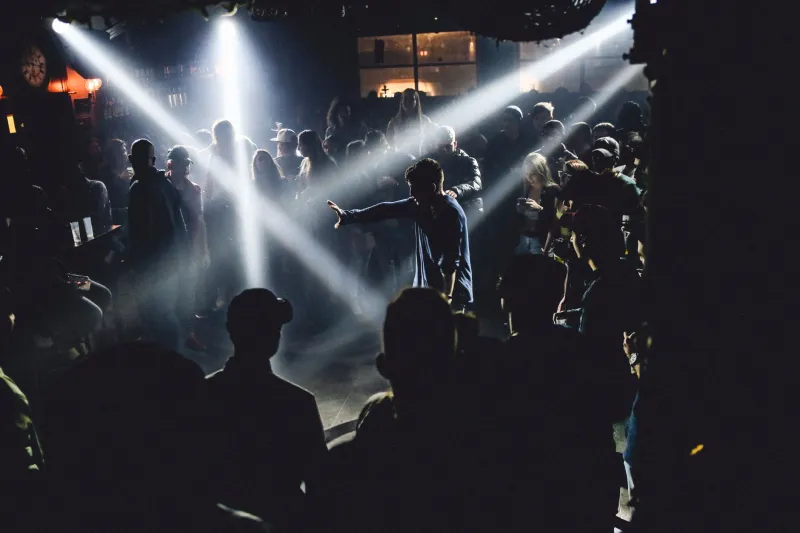
This spatial logic has only deepened since then. Walk into almost any major NYC club tonight and you'll notice the architecture tells you exactly what the economics are before a single drink is poured. Tables ring the perimeter and often occupy prime sightlines to the DJ booth or stage. The dance floor — historically the democratic heart of any club — gets squeezed toward the middle or pushed to a secondary room. The message embedded in the floor plan is unmistakable: movement is free, but stillness costs money.
The Tiered Entry Fee as Social Sorting Machine
The velvet rope was always about selection. But the modern tiered pricing structure — general admission at the door, "VIP entry" that skips the line for a fee, table minimums that start at $500 on a Tuesday and climb past $2,000 on New Year's — turns that selection into a formalized economic ladder.
"There are basically four or five distinct financial tiers operating simultaneously in a single room on any given night," explains one club owner who operates two venues in lower Manhattan. "You've got the people who got in for free because they're on a guest list, the people who paid a cover, the people who paid a premium to skip the line, the people at tables with a minimum, and then the private event bookings in the back. Every one of those people is having a different experience of the same room, and most of them don't fully realize it."
What's particularly interesting — and worth sitting with — is how that stratification maps onto race and class in ways that rarely get discussed openly in the industry. The guest list, as we've explored before on PulseWave, is its own coded system. But the table minimum structure adds another layer: it effectively prices out not just the broke but the merely middle-class, creating a version of New York nightlife that mirrors the city's broader gentrification story. The neighborhoods change, the rents go up, the old regulars get priced out, and the room fills with people who can afford to perform their presence.
What the Numbers Actually Say
The math of a table minimum is worth unpacking. A $1,000 minimum sounds steep until a club owner explains the internal calculus: a six-top table takes up space that might otherwise hold 15 to 20 standing customers paying $20 covers. At $300 in cover revenue versus $1,000 in table spend, the economics favor the table every time — especially when you factor in the operational simplicity of serving a predetermined group versus managing bar traffic.
"We're not selling alcohol at those prices, we're selling a service package," the Manhattan owner says. "The ice bucket, the mixers, the dedicated server, the guaranteed seating — that's a hospitality product. The bottle is almost incidental."
But here's where the cultural critique lands hardest: when clubs optimize entirely for table revenue, the room stops being a place where music and energy are the primary product and starts being a place where the spectacle of spending is the primary product. The DJ becomes background. The dancing becomes optional. The whole sensory architecture of what made a great New York club night — the sweat and the bass and the anonymous communion of a packed floor — gets subordinated to the theater of wealth display.
Long-time regulars who've watched venues like Output in Brooklyn or Cielo in the West Village maintain their integrity by resisting the table-service model will tell you that the distinction is felt immediately. "You can feel when a room is built for the music versus built for the money," says one DJ and longtime Brooklyn nightlife figure. "The sound system hits different. The crowd faces the booth instead of facing each other. The whole energy has a different center of gravity."
Who the Night Is Actually Built For
The honest answer, when you follow the pricing logic all the way down, is that the high-end NYC club model was never really built for the people who love nightlife. It was built for the people who love the idea of being seen loving nightlife — a subtle but crucial distinction. The bottle service economy rewards performance over participation, display over immersion.
That doesn't mean the experience is without value for the people paying for it. Plenty of people genuinely enjoy the table service format, the dedicated attention, the social ritual of pouring drinks for your group. There's nothing inherently wrong with wanting a comfortable, exclusive experience on a Saturday night.
But it's worth being clear-eyed about what gets lost when an entire city's nightlife infrastructure reorganizes itself around that preference. The venues that can't or won't compete on table minimums get squeezed by rising rents. The promoters who built careers on filling dance floors lose leverage to the hospitality groups that fill tables. The music — always the music — gets treated as a luxury amenity rather than the main event.
New York has always been a city where the price of admission to the good stuff is punishingly high. But there's a difference between a city that makes you work for its best nights and a city that's quietly replaced its best nights with a more profitable simulation of them.
The velvet rope was always a boundary. The question worth asking now is exactly what it's keeping out — and whether the room on the other side is still worth the price of entry.