Six Dollars and a Ticket Stub: The Coat Check as NYC Nightlife's Truest Litmus Test
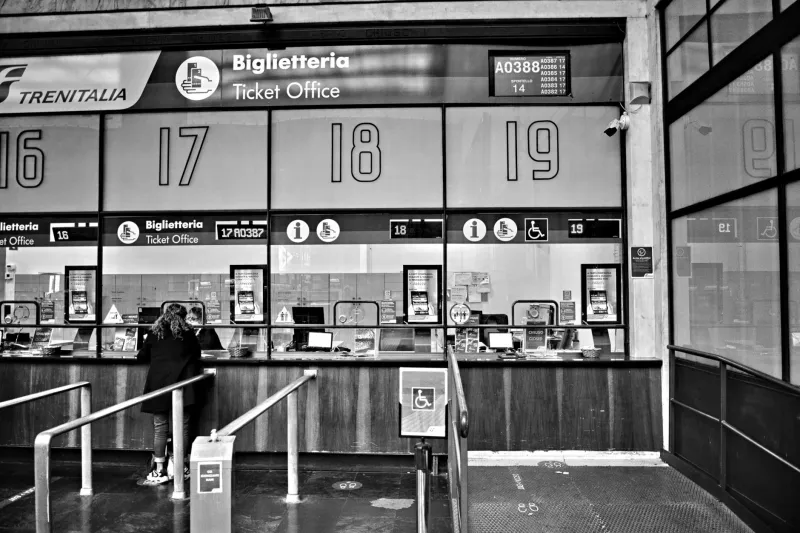
Six Dollars and a Ticket Stub: The Coat Check as NYC Nightlife's Truest Litmus Test
You hand over your jacket. You get a numbered ticket. Somewhere in the back, your North Face or your vintage Moto or your very-much-on-sale Zara blazer disappears into a wall of hangers managed by one or two people who are about to have the most chaotic four hours of their week. That's it. That's the whole thing.
And yet — that transaction? It's telling you everything.
The coat check is nightlife's most underexamined institution. It doesn't get the think pieces. Nobody's writing songs about it. But spend enough Saturday nights moving through New York City's clubs, bars, and music rooms, and you start to notice that the coat check — its presence, its absence, its price, its vibe — functions as a kind of moral and economic X-ray of the room you're about to spend the next five hours in.
The Logistics Nobody Talks About
Let's start with the operational reality, because it is genuinely wild and almost nobody outside the industry thinks about it.
A 500-person Saturday night at a mid-sized Brooklyn club — say, somewhere along the Williamsburg waterfront or tucked into a Bushwick warehouse block — means potentially 400 coats, bags, and assorted layers moving through a coat check window between 10 PM and 2 AM. In waves. All at once when the headliner goes on. All at once again when the lights come up.
The people running that operation are typically working for tips and a flat hourly rate that does not reflect the chaos they're managing. They are memorizing ticket numbers by feel, fielding drunk patrons who've lost their stubs, locating the one black puffer jacket that looks identical to forty other black puffer jackets, and doing all of this while maintaining enough composure to not visibly lose their mind. It is, genuinely, one of the most undervalued skill sets in the entire venue ecosystem.
When it goes wrong — and it goes wrong — it goes spectacularly wrong. A missing ticket at 3 AM when someone's trying to catch the last L train is not a minor inconvenience. It is a full interpersonal crisis. The coat check worker becomes, in that moment, the entire venue's ambassador, and how they handle it tells you everything about how the club actually treats its staff.
What the Price Tag Is Really Saying
Free coat check. Five dollar coat check. Eight dollar coat check. No coat check at all.
Each of these is a statement of intent.
Free coat check is a venue saying: we've built this into the cost of doing business, and we respect that you're already spending money here. You tend to find this at spots that are either very high-end (where it's absorbed into the premium experience) or genuinely community-oriented (where the culture demands it). Either way, it signals that the venue has thought about your experience beyond the bar tab.
The five-to-eight dollar range is the NYC standard, and it's mostly fine — but watch the attitude that comes with it. Is it posted clearly? Is there a tip jar that's visible and not guilt-tripping? Is the person behind the window acknowledged as a human being by the venue's floor staff? The mechanics of a paid coat check reveal whether a club views this as a guest service or a secondary revenue stream.
And then there's no coat check at all. Which, in a New York winter, is a choice. A deliberate one. It says: figure it out. Sometimes that's the authentic DIY spirit of a genuinely underground space — a loft party, a pop-up, somewhere that physically cannot accommodate the infrastructure. But sometimes it's a mid-sized venue that simply doesn't want to staff it, and the burden gets transferred entirely to you: dragging your coat onto the dance floor, sitting on it, tying it around your waist, abandoning it in a corner and spending the next two hours mildly anxious about it. That anxiety? That's the venue's operating cost, externalized onto you.
The Tipping Economy and the Unspoken Contract
Here's where class really enters the picture.
The tip-at-coat-check norm is one of those New York nightlife customs that everybody sort of knows about and almost nobody talks about explicitly. A dollar or two per item is the baseline. More if it's a big night, if they were fast, if they handled your weird oversized tote without making you feel judged.
But the people who tip generously at coat check are, disproportionately, people who have worked service jobs. People who know what it's like to stand behind a counter for six hours being treated like furniture. The crowd that breezes past the tip jar without a glance tends to be the crowd that also treats bartenders like vending machines and ignores the bathroom attendant.
Watch the coat check interaction and you can read the room in real time. The way a crowd tips — or doesn't — at that first point of contact sets the tone for how the whole night is going to feel inside. Venues that attract generous coat-check tippers tend to have warmer, more communal energy on the floor. Correlation? Maybe. But it's consistent enough to be worth noting.
Absence as Architecture
Some of the most interesting venues in New York have made the coat check part of their identity — or made its absence equally intentional.
Certain jazz rooms and intimate listening spaces have done away with it entirely, not out of negligence but because the room is small enough that your coat on the back of your chair is part of the texture of the night. It's casual. It's human. It matches the vibe of a place where people are there to listen, not perform.
Conversely, the clubs that have invested in genuinely well-run coat checks — staffed properly, clearly priced, with a system that actually works — are often the ones that sweat every other detail too. Good sound system. Thoughtful booking. Bathrooms that aren't a disaster by midnight. The coat check is the canary in the coal mine. If a venue can't manage 400 jackets with dignity, what else are they not managing?
The Jacket You Left Behind
There's a particular New York experience — anyone who's lived here long enough has had it — where you leave a coat check ticket in last night's jeans and have to go back to the venue the next day, slightly hungover, to retrieve your jacket from someone who's now operating in a completely different register: the daylight staff, the cleaning crew, the booking manager who happens to be in early.
Those interactions are strangely intimate. The venue stripped of its nighttime skin. The coat check window closed, the hangers mostly empty. Your jacket, somehow, still there.
It's a reminder that all of this — the music, the crowd, the ritual of the night out — is built on an infrastructure of small transactions and quiet labors that mostly go unnoticed. The coat check worker who found your ticket at 2 AM. The person who held your spot in line. The bartender who caught your eye before you even raised your hand.
New York nightlife runs on those moments. The coat check is just the first one of the night — and if you're paying attention, it's the one that tells you whether the rest of them are going to be worth it.