Fluorescent Cathedrals: Why the 24-Hour Bodega Is NYC's Greatest After-Party Venue
Fluorescent Cathedrals: Why the 24-Hour Bodega Is NYC's Greatest After-Party Venue
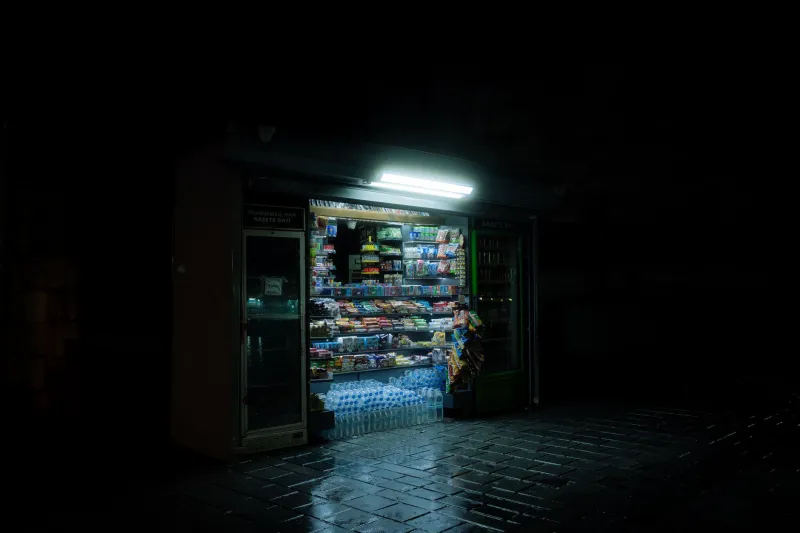
It's 3:17 AM on a Saturday in Bed-Stuy. Outside, the block is quiet except for the distant thump of a car stereo fading around the corner. Inside a narrow corner store on Fulton Street, though? It's something else entirely. A woman in a sequined bodysuit is debating hot sauce options with a guy still wearing his wristband from a show at a venue three neighborhoods away. Two friends who met on the dance floor an hour ago are now splitting a bag of plantain chips like they've known each other for years. The bodega cat surveys all of it from atop a stack of paper towels with complete, regal indifference.
This is the after-party nobody RSVPed to. And honestly? It might be the best one happening in New York City tonight.
The Venue Nobody Booked
For all the ink spilled about Manhattan's rooftop lounges, Brooklyn's warehouse raves, and the Bronx's legendary block parties, there's a venue type that never gets its flowers: the 24-hour bodega. These storefronts — roughly 13,000 of them scattered across the five boroughs — operate as something far more complex than convenience stores once the rest of the city goes dark. They become pressure-release valves. Confessional booths. Impromptu diners. The place where the night's accumulated energy gets processed, shared, and eventually metabolized into something resembling a memory.
Miguel Reyes has owned a bodega on the Grand Concourse in the Bronx for over two decades. He's watched the neighborhood shift around him in ways that would fill a book, but the one constant, he says, is the 3 AM crowd. "After the clubs, after the bars, people come here and they're still alive, you know? Still buzzing. They don't want to go home yet but they don't know what to do with themselves. So they come here."
He's not complaining. If anything, he sounds proud.
"I've seen people fall in love in this store. I've seen old friends run into each other after years. I've seen people cry into a cup of coffee at four in the morning and then laugh about it by four-thirty. This place sees everything."
The Social Contract of the Bacon-Egg-and-Cheese
There's an unspoken code that governs the late-night bodega. Nobody announces it, but everyone who's spent real time in this city understands it intuitively. You don't rush the grill guy. You don't hog the hot food counter. You let the person who looks like they've had a harder night than you cut in line if the situation calls for it. And above all, you talk to strangers — because at 3 AM in a fluorescent-lit corner store, the usual social walls have dissolved somewhere between the last drink and the walk over.
Jasmine Torres, a regular at a bodega near the Myrtle-Broadway J stop in Bushwick, describes it as a kind of social reset button. "You come out of a club and everyone's performing, right? Everyone's got their look, their vibe. But the bodega strips all that away. You're just a person who's hungry and tired and still a little wired, standing next to another person who's exactly the same. It's equalizing."
That equalizing effect is no accident. Unlike virtually every other node in the nightlife ecosystem — the venue, the bar, the after-hours spot — the bodega has no economic incentive to curate its clientele. A $3 bacon-egg-and-cheese doesn't care what you're wearing or who you know. The door policy is: do you have money for a sandwich? Then welcome.
From the Bronx to Bed-Stuy: Every Block, a Different Room
What makes the bodega-as-venue phenomenon so rich is how radically it shifts by neighborhood. In Astoria, the late-night crowd skews toward restaurant workers and bar staff finishing their own shifts, comparing notes on difficult tables while eating their first real meal since noon. In Washington Heights, the post-party bodega scene has a distinctly musical undercurrent — someone always seems to have a Bluetooth speaker, and the playlist negotiations are genuinely competitive.
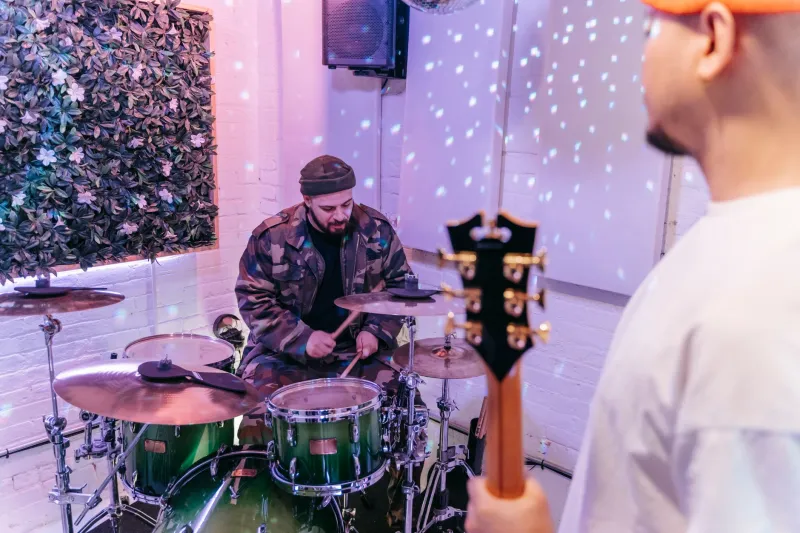
Down in Bed-Stuy and Crown Heights, where the DIY music scene has deep roots, it's not unusual to find the bodega functioning as an informal post-show debrief. Bands, their friends, the people who came to see them — everyone ends up at the same counter, picking apart the set, arguing about the mix, making plans for the next one. The bodega becomes, improbably, an extension of the venue itself.
"I know the musicians who play around here," says Darnell Washington, who runs a store near the Utica Avenue A/C stop. "They come in after shows, they're talking about music, they're excited. Sometimes they're disappointed. Either way, they're here. My store is part of their night."
He pauses, then adds something that lands harder than he probably intended it to: "I think for some of them, coming here is part of how they know the show really happened."
The People Who Keep the Lights On
It would be easy to romanticize all of this without acknowledging the labor behind it. The person behind the counter at 3:30 AM isn't there for the sociological experience. They're working — often for long stretches, often alone, managing a stream of customers whose energy levels and emotional states run the full spectrum of human experience.
Many bodega workers describe the late-night shift as demanding in ways that are hard to articulate to people who haven't done it. You're part cashier, part short-order cook, part de facto therapist, part security presence. You have to read situations fast and stay calm when the room gets loud.
But there's also something else that comes through when you talk to the people who've worked these shifts for years: a genuine affection for the city they're serving at its most unguarded. "People are real at this hour," says one worker at a Bushwick store who asked to remain anonymous. "The day version of people — that's the performance. This is who they actually are."
No Cover, No Curation, No Compromise
In a city where nightlife access is increasingly stratified — where the best rooms require connections, the right look, or a credit card that doesn't flinch at a $25 cocktail — the bodega represents something quietly radical. It's a space that the market never got around to optimizing, and that oversight has made it irreplaceable.
You can't book a table. You can't get on a list. There's no promoter taking a cut and no DJ getting paid to set the mood. The soundtrack is whatever's on the radio or bleeding through someone's earbuds. The lighting is, objectively, terrible. And yet, night after night, New Yorkers keep showing up — still buzzing, still hungry, still not quite ready to let the night become yesterday.
The clubs will always have their pull. The bars will always have their charm. But when the bass fades and the crowd disperses and the city asks you what you're going to do next, there's one answer that never really fails: find the nearest open light and walk toward it.
The bacon-egg-and-cheese will be ready in four minutes. The conversation's already started.