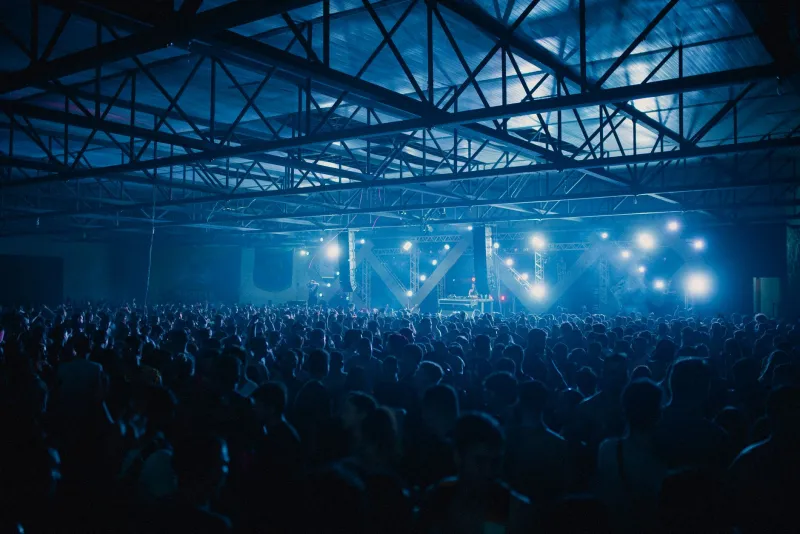
What the Door Price Is Really Telling You Before You Step Inside
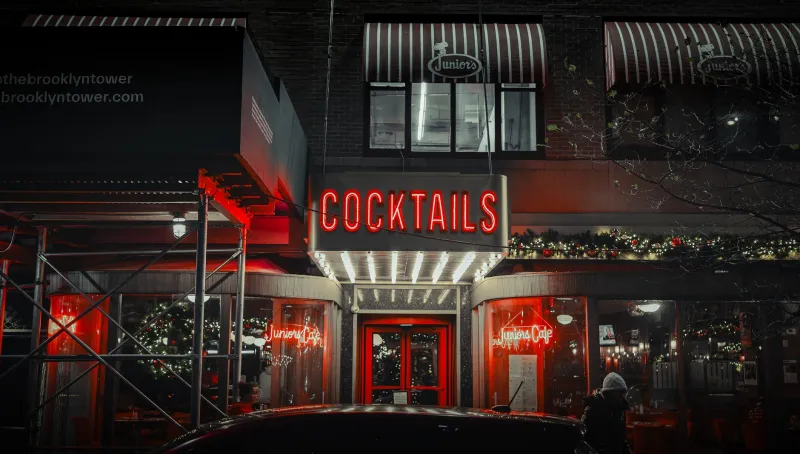
You're standing on a sidewalk somewhere in New York City. Maybe it's a Tuesday in Bushwick, maybe it's a Saturday in the Meatpacking District. A person with a clipboard or a velvet rope or just a very specific energy looks at you and tells you the number. Twenty dollars. Forty. Seventy-five. Or — surprise — nothing at all.
That number is not arbitrary. It never was.
Cover charges in this city are one of the most underappreciated communication tools in nightlife. Before you've heard a single note, before you've tasted a drink, before you've even made eye contact with whoever's performing — the door price has already told you something. The question is whether you know how to listen.
The $5–$15 Zone: Respect Over Revenue
Let's start at the bottom of the range, which is actually the most interesting place to be. A jazz bar on the Lower East Side charging eight bucks to get in isn't trying to make rent off the cover. That price point exists as a statement: we value the art enough to ask you to value it too.
"It's a commitment mechanism," says one longtime booker who works with small jazz and experimental music rooms across Manhattan and the Bronx. "When it's free, people treat it like background noise. When there's even a small cost, they show up on time, they listen, they tip the musicians. The price changes the room's energy before anyone plays a note."
This is the zone where cover charges function almost entirely as cultural curation. The venues aren't gatekeeping by wealth — they're gatekeeping by intention. A $10 cover at a DIY space in Ridgewood is a handshake agreement: you came here on purpose, and so did we.
The $20–$40 Middle Ground: Where Things Get Complicated
This is where cover charges start pulling double duty, and where most New Yorkers spend the most time second-guessing themselves.
At this price point, you're typically looking at a booked DJ set, a mid-level touring act, or a themed party night with production value — lights, a proper sound system, maybe a photo booth that no one uses after midnight. The cover here is doing real economic work. Venues in this bracket are often covering artist fees, sound engineer costs, and the general overhead of running a space in a city where everything costs approximately too much.
But here's where it gets murky: a $30 cover at a respected Brooklyn club often signals something completely different than a $30 cover at a rooftop bar in Midtown with a bottle-service section and a DJ playing the same eight songs you heard at brunch.
"People see the same number and assume the same experience," says a promoter who runs monthly events at venues across Queens and Brooklyn. "But the $30 at our nights goes back into the artist, into the sound, into making the room feel right. The $30 at some of these hotel-adjacent spots is just... a vibe tax."
The lesson? In the $20–$40 range, you have to do your homework. Who's playing? Who's promoting? Does this venue have a reputation for actually caring about what happens inside?
The $50–$100+ Tier: You're Paying for a Story
Let's be honest about what's happening at the top end of the cover charge spectrum. You're not necessarily paying for better music. You're not guaranteed a superior sound system or a more transcendent experience. What you're paying for — at least in part — is the ability to say you were there.
High-ticket events in New York operate on scarcity and social currency. A $75 cover for a New Year's Eve party at a venue in the Flatiron District or a $90 ticket for a marquee DJ at a Chelsea club isn't priced that way because the experience is nine times better than the $10 jazz show. It's priced that way because exclusivity is the product.
None of that is inherently wrong. Plenty of high-dollar nights deliver. But it's worth being clear-eyed about what you're actually purchasing.
"There's a version of this that's legitimate," admits one venue owner who operates spaces at multiple price points across the city. "A truly world-class DJ flying in from Europe, a venue that's invested in their sound and their staff, a night that's been thoughtfully curated — that costs money to produce. But there's also a version where the price is just a velvet rope in numeric form. And savvy nightlife people in this city have learned to tell the difference."
Free Admission: The Most Complicated Cover of All
Here's the counterintuitive part of this whole conversation: free isn't always the best deal.
A no-cover bar on a Wednesday night in the East Village might be genuinely trying to build community, introduce new artists, or simply keep the lights on through drink revenue. That's a real and valuable thing. But free admission can also signal that a venue is struggling to draw a crowd, that the lineup wasn't strong enough to justify a charge, or — in some cases — that the real cost is buried in a two-drink minimum or aggressively priced cocktails.
"Free cover is a tool, not a gift," one regular on the Brooklyn party circuit put it plainly. "Sometimes it means you stumbled into something special. Sometimes it means you're going to spend $22 on a vodka soda and wonder what happened to your night."
Reading the Room Before You're In the Room
So what's the actual takeaway for anyone trying to navigate New York's wildly inconsistent door economy?
First: context matters more than the number. A $15 cover at a venue with a serious reputation and a thoughtful lineup is almost always a better investment than a $15 cover at a place that just wants warm bodies.
Second: the cover charge is a relationship. It tells you something about how a venue sees its audience. Does the price feel like it's asking you to participate in something, or does it feel like it's filtering you by credit limit?
Third: talk to the people who've been going longer than you. New York nightlife has a deep oral tradition of recommendations and warnings. The person who's been hitting the same monthly party for three years knows whether the cover is worth it. Find that person.
The door price is never just a number. In a city this loud and this layered, it's the first sentence of the story the night is about to tell you. Learn to read it, and you'll stop gambling with your Friday nights.
Cover charges vary by venue, night, and lineup. Always check event pages and follow promoters directly for the most accurate pricing information.