Grimy by Design: The NYC Venues That Wear Their Decay Like a Badge of Honor
Walk into certain rooms in this city and the smell hits you first. Not a bad smell, exactly — more like compressed time. Decades of spilled drinks, cigarette ghosts from before the ban, the particular musk of ten thousand sweating bodies that the ventilation system never quite evacuated. It's the smell of a room that has been used, hard, for a long time, by people who meant it.
This is not an accident. And in 2025, in a New York City that has spent the better part of two decades sanding off its own rough edges, it's increasingly a choice — an active, deliberate, sometimes financially painful choice made by the people who run these spaces.
What Authenticity Actually Costs
Let's start with the economics, because they're more interesting than the mythology. Maintaining a venue in a state of controlled deterioration — keeping it functional without making it comfortable — is genuinely expensive in ways that aren't immediately obvious. Structural safety requires ongoing attention. Sound systems need maintenance even when the walls don't get painted. The plumbing has to work. What these spaces are refusing to invest in is the cosmetic upgrade, the renovation that would make the room look like it was built last year rather than lived in for forty.
That refusal is a business decision as much as an aesthetic one. A freshly renovated club loses something that can't be recovered — a particular relationship to history that certain artists and audiences actively seek out. When a booker can tell a touring act that the room they're playing has hosted every significant wave of New York underground music for the past three decades, that's a pitch that no amount of new drywall can replicate.
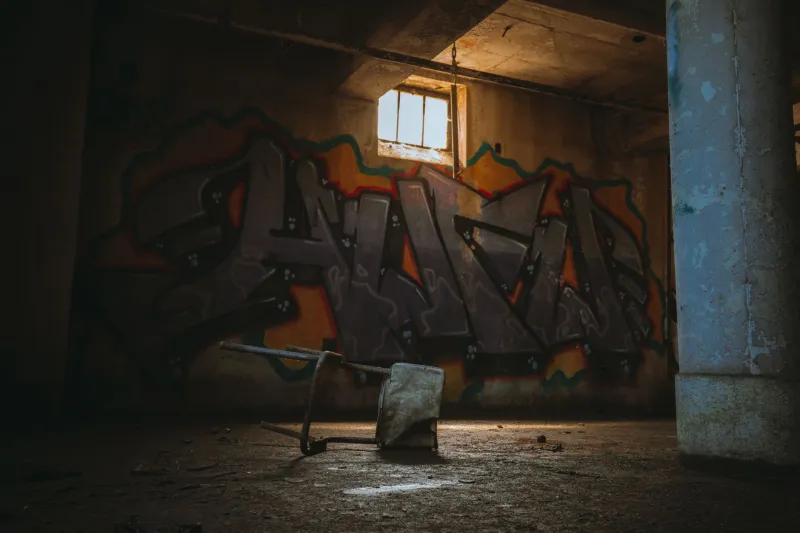
The graffiti matters. The water stains on the ceiling matter. The stage that's been repaired so many times it has layers of different wood species visible at the edges — that matters. These aren't defects. They're documentation.
The Rooms That Refuse to Blink
A few spaces in New York have built their entire identity around this kind of accumulated character. You know the ones — the loft in Bushwick where the exposed brick has been tagged and retagged for fifteen years and nobody's ever touched it with a roller. The basement venue in the East Village where the sound bleed from the pipes is so consistent that local bands have started writing around it. The converted warehouse space in Long Island City where the ceiling is held together by intention and the confidence of whoever poured the original concrete in 1962.
What these venues share isn't just age. Plenty of old rooms get renovated. What they share is a philosophy: that the accumulation of use is itself a kind of architecture, that the marks left by every band and every crowd are structural rather than superficial. Strip that away and you don't have a clean room — you have an empty one.
Promoters who work these spaces talk about it in almost spiritual terms. There's a sense that the room has absorbed something from every event it's hosted, that it carries a resonance that newer venues simply haven't had time to develop. Whether or not you believe that literally, it functions as a genuine draw. Artists request these rooms. Audiences seek them out specifically.
Grime as Gatekeeping
Here's where it gets complicated, because this aesthetic isn't neutral. The deliberately rough room performs a kind of self-selection that's worth examining honestly. A space that looks intimidating — that doesn't have a coat check or a proper bar or lighting that flatters anyone — is implicitly telling certain audiences they might not belong there. That can protect a scene's integrity. It can also reproduce exclusions that have nothing to do with musical taste.
The best of these venues are aware of this tension. They work to make their discomfort democratic — equally unwelcoming to everyone in its refusal to be precious, rather than specifically hostile to particular communities. The worst use grime as a cudgel, a way of maintaining the kind of in-group insularity that mistakes insularity for authenticity.
The distinction matters. A room that's rough because it's been genuinely used by a genuinely diverse community of artists and audiences over many years is a different thing entirely from a room that's rough because its operators decided that roughness would attract a particular kind of crowd. One is history. The other is cosplay.
Renovation as Erasure
The pressure these spaces face isn't just economic, though the economics are brutal. It's also cultural. New York has been in an extended conversation about what the city is for — who it serves, what it preserves, what it's willing to lose in the name of development and safety and the particular vision of urban livability that tends to favor people with money and quiet preferences.
In that context, a venue that refuses renovation is making a political statement whether it intends to or not. It's insisting that the city's history of noise and density and creative friction is worth preserving in physical form — not just in oral histories and archival photos, but in actual rooms where people can still go and feel it.
That insistence is increasingly rare and increasingly meaningful. The mid-tier venues that used to serve as a middle ground — not luxurious, not brutal, just functional — have largely been priced out or converted. What's left is the high-end experience venue and the room that refuses to clean up, and the distance between them has never been wider.
Why It Still Matters
If you've ever stood in one of these rooms during a set that was genuinely transcendent — where the sound was filling every corner of a space that felt like it had been waiting for exactly this moment — you understand why people fight to keep them. The acoustics of a room shaped by decades of use are different. The atmosphere of a space that has survived everything the city has thrown at it is different. The feeling of being in a place that means something beyond its current commercial function is different.
These venues are not comfortable. They are not convenient. They are not Instagram-optimized. They are, in the most literal sense, the pulse of what New York's underground music culture has always been — a little dangerous, deeply committed, and absolutely unwilling to apologize for the mess.