200 Seats, Maximum Impact: The Quiet Power Shift Happening in NYC's Smallest Music Rooms
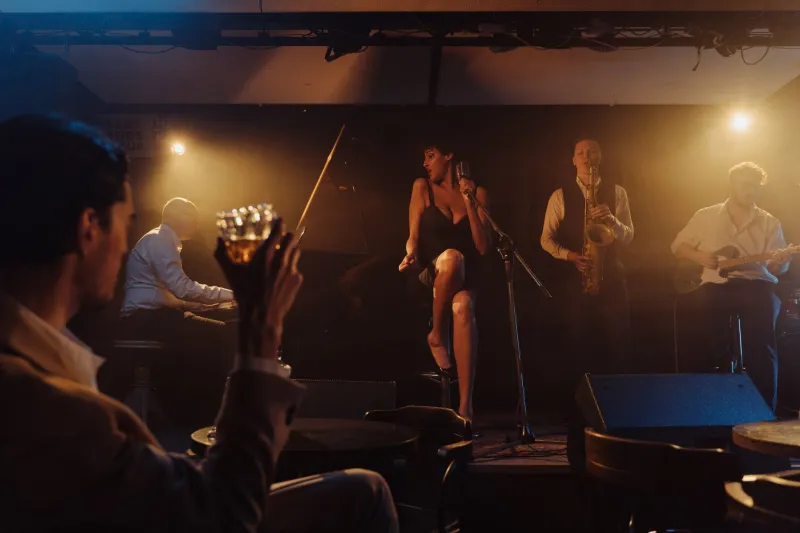
Last winter, a well-known indie artist with a streaming catalog in the hundreds of millions announced a five-night residency at a Lower East Side venue with a capacity that would embarrass a high school gymnasium. The shows sold out in minutes. Resale prices climbed to levels that would have bought a decent seat at Madison Square Garden. And every night, for about ninety minutes, something happened in that room that no arena could have replicated — a kind of collective intensity that felt less like a concert and more like a shared secret.
This is the intimacy premium, and it's quietly becoming one of the most interesting dynamics in New York's live music economy.
The Economics of Scarcity
The math here is counterintuitive at first glance. An artist playing a 200-capacity room is leaving an enormous amount of money on the table compared to a 10,000-seat booking. The gross revenue differential is staggering. So why are established artists — people with real options — choosing to play small?
The answer has multiple layers. First, the obvious one: scarcity creates desire. When access to an artist's live presence is genuinely limited, the cultural value of that access inflates dramatically. The fan who gets into the small show has something that cannot be purchased at scale, and that exclusivity generates a kind of loyalty and attention that a stadium tour simply cannot manufacture. In an attention economy where every artist is competing for the same finite hours of human awareness, that kind of concentrated devotion is worth more than it might appear on a box office spreadsheet.
Second, there's the creative argument. Artists who spend most of their touring lives in massive rooms — where the PA system is a quarter mile from the back row and the audience is a blur of phone screens — often describe intimate shows as recalibrating. The feedback loop between performer and crowd is immediate and visceral in a small room. You can hear individual voices. You can see faces. That changes what you do on stage, and artists who care about their craft find that genuinely valuable.
The Parasocial Collapse
Here's the cultural dynamic that nobody talks about enough: the intimate show is partly a response to the parasocial relationship that streaming and social media have created between artists and their audiences.
Fans in 2025 feel like they know the artists they love in a way that previous generations simply didn't have access to. They've seen the Instagram stories from the tour bus, the behind-the-scenes TikToks, the candid interviews. The relationship feels personal even when it's mediated through a dozen layers of platform and algorithm. And then they go to the arena show and suddenly they're one of 18,000 people watching a tiny figure on a distant stage through a screen on their phone because that's the only way to actually see what's happening.
The small room collapses that gap. The artist is right there. The experience validates everything the parasocial relationship promised. For a certain kind of deeply invested fan, that validation is worth almost any price — which is why resale markets for intimate shows have become genuinely alarming, and why the question of who actually gets access to these events has become a real equity issue.
Who's Getting Left Out
Let's be direct about the access problem, because it's significant. When a 200-capacity show sells out in four minutes to people who have faster internet connections, better bots, or more disposable income for resale, the result is a live music experience that is effectively priced out of reach for a huge portion of the artist's actual fan base.
This isn't a new problem — exclusivity in live music has always tracked with economic privilege — but the intimate show format intensifies it. At least at an arena, there are enough seats that most people who want to go can eventually find a way in. At a 200-person show, the math is just brutal. And in New York specifically, where the cost of living has already made cultural participation a class issue in deeply uncomfortable ways, the intimacy premium can feel like another mechanism for concentrating access among the already-advantaged.
Some artists and venues are working against this. Lottery systems, fan club presales, price caps, and intentional partnerships with community organizations are all being deployed to make sure that the people who've been with an artist longest — often the people with the least financial flexibility — aren't systematically excluded. These efforts matter, and they deserve credit, but they're working against some powerful economic currents.
NYC's Shrinking Middle and What It Means
The intimacy trend doesn't exist in a vacuum. It's partly a response to the collapse of New York's mid-sized venue landscape — the 500-to-1,500-capacity rooms that used to serve as the crucial middle tier of the live music ecosystem. Those venues have been disappearing for years, squeezed by real estate pressure, rising operating costs, and the particular brutality of New York's commercial rent market.
What's left is increasingly polarized: the arena on one end, the tiny room on the other, with a gaping hole in the middle where a whole ecosystem of mid-level touring used to live. That polarization has consequences for how artists develop, how audiences discover music, and how the city's live music culture reproduces itself across generations.
The intimate show is in some ways filling a gap left by that missing middle — offering an experience that feels personal and significant rather than merely massive. But it's doing so at a scale that can't sustain the full breadth of what mid-sized venues used to provide.
What the Small Room Actually Delivers
Set all of that aside for a moment and just consider what happens in a room where everyone present knows they're somewhere that most people couldn't get into. There's a particular charge to that knowledge. It creates a kind of collective investment in the experience — everyone there is aware of what they have, and that awareness amplifies everything that happens on stage.
The sound is different when it's filling 2,000 cubic feet instead of 200,000. The artist's body language reads differently at thirty feet than at three hundred. The songs themselves can be different — more fragile, more experimental, less dependent on the kind of broad gestures that play to the back of an arena.
New York has always been a city that rewards intensity over scale, specificity over spectacle. The intimate show, for all its complicated economics and access problems, taps into something real about what this city values when it's at its best — the sense that what's happening in this room, right now, is something that matters. That it's not just entertainment. That it's, somehow, a moment.
Two hundred seats. Full house. Maximum impact. The pulse of the city, compressed into something you can almost hold.