Crates Before Clubs: How NYC's Record Shops Became the New Underground Social Scene
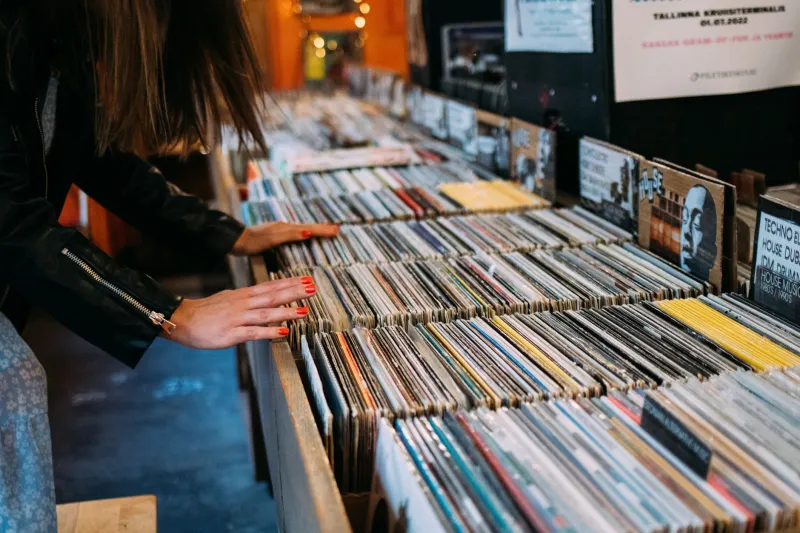
There's a moment that happens in certain New York record shops somewhere around 9 p.m. on a Thursday. The fluorescent overheads dim slightly — or maybe your eyes just adjust — and the handful of people who were browsing separately start talking to each other. Someone pulls a copy of a forgotten 1978 Bronx boogie pressing from a dollar bin. Someone else recognizes it immediately. And just like that, the room shifts from retail transaction to something closer to a congregation.
This is the vinyl revival's quieter, weirder dividend. While the streaming wars dominate every music industry headline and Spotify playlists are engineered by algorithm to feel like personality, a parallel economy has been building in the city's independent record stores — one measured not in follower counts but in crate depth, in knowledge, in the social currency of knowing things other people don't.
The Shop as Social Infrastructure
Spend a few evenings at spots like A-1 Record Shop in the East Village, Halcyon in Red Hook, or any of the handful of specialty shops that have survived the city's relentless commercial real estate churn, and a pattern emerges. These aren't just retail spaces anymore. They're functioning social hubs with their own hierarchies, their own regular cast of characters, and their own unspoken codes of conduct.
The economics driving this are genuinely interesting. Rare vinyl — original pressings, regional releases, promo copies, anything with a story — has appreciated dramatically over the past decade. A mint-condition copy of an early ESG 12-inch or a first pressing of a Prelude Records disco cut can command hundreds of dollars from the right buyer. That kind of value turns browsing into something closer to treasure hunting, and treasure hunting, as anyone who's played a dungeon crawler knows, is more fun with company.
But it's not just about the money. The social dimension runs deeper than resale margins. What's happening in these spaces is something like the recreation of the record pool culture that shaped New York DJing in the 1970s — a scene built around shared access to music, where who you know and what you know overlap almost completely.
The Digger Hierarchy Is Real, and It's Complicated
Let's be honest about something: crate-digging communities have always had their gatekeeping tendencies, and the current moment is no exception. There's a real social hierarchy at work in these rooms, and it can feel exclusionary in ways that mirror the door politics of any midtown nightclub — just with different signifiers.
Knowledge is the velvet rope here. Knowing the difference between a Japanese pressing and a domestic one, recognizing a counterculture label on sight, understanding why a certain catalog number matters — these are the credentials that get you taken seriously. Show up and flip records spine-out without engaging with any of it, and you'll be tolerated. Show up and demonstrate actual depth, and suddenly you're in a different conversation entirely.
This isn't inherently bad. Knowledge-based communities have always operated this way, and there's something genuinely valuable about spaces where expertise is the primary currency rather than wealth or aesthetic performance. But it's worth naming. The vinyl scene's gatekeeping can skew toward a particular demographic — often older, often male, often white — in ways that don't reflect the full breadth of New York's musical culture. The best shops in the city are actively working against that tendency, curating events and community that actively invite people who might not have grown up with access to this world.
Late-Night Browsing as Nightlife
What's genuinely new about the current moment is the temporal shift. Record shops used to close at six. Now, the most culturally alive ones are hosting late-night events — listening sessions, DJ sets played through the shop's own sound system, pop-ups where a collector brings in a personal archive and lets people dig through it. These aren't promotional stunts. They're pulling real crowds, including people who also have a show to get to later or a club night starting at midnight.
The shop becomes a pre-game with actual cultural content. You dig for an hour, you find something, you talk to three strangers about it, and you leave with a record and two new contacts who might book you for a party or tip you off to a warehouse event in Ridgewood that doesn't have a public address yet. That's a form of networking that the club itself often can't replicate, because the club is loud and dark and optimized for a different kind of connection.
There's also something to be said for the intimacy of the transaction itself. Buying a record is a physical act. You hold it. You look at the label. You read the liner notes. In a city that has increasingly mediated every cultural experience through a screen, that physicality carries weight. It signals commitment. And commitment, in New York's underground scenes, has always been its own kind of status.
Streaming Didn't Kill This — It Fed It
Here's the counterintuitive part: the streaming era didn't destroy the vinyl economy. In a real sense, it accelerated it. When everything is available to everyone instantly, scarcity becomes the luxury. Owning a physical object that not everyone can have — that takes time and knowledge and luck to find — becomes its own form of cultural distinction.
The collectors who are driving the current market understand this intuitively. They're not anti-streaming. Most of them use Spotify and Apple Music like everyone else. But they also understand that the records they find in a Bushwick shop on a random Tuesday represent something that an algorithm can't surface — a connection to a specific moment in a specific city, pressed into a specific piece of vinyl that has its own history of hands.
That's the real currency moving through NYC's backroom record economy right now. Not just the dollar value of a rare pressing, but the story it carries — and the community that forms around people who care enough to go looking for it.
The clubs will always be there. But the crates? The crates are where the real conversation starts.