8-Bit Animals: The Night Anamanaguchi Took PulseWave to Another Dimension
By November 2009, Anamanaguchi were already a band in transition. They'd released Power Supply the year before — a record that felt like someone had strapped a rocket engine to a Super Nintendo and aimed it directly at your chest — and the word was spreading fast. The blog ecosystem that drove indie music discovery in the late 2000s was starting to pay attention. Pitchfork had taken notice. The kids who'd been following the chiptune underground for years were saying told you so to anyone who'd listen.
So when PulseWave booked them for a November 2009 show, alongside guest performances from Paris, Notendo, and others, it wasn't just another night on the calendar. It was a document. A before-and-after. A room full of people who understood they were watching something cross over in real time.
The Anamanaguchi Equation
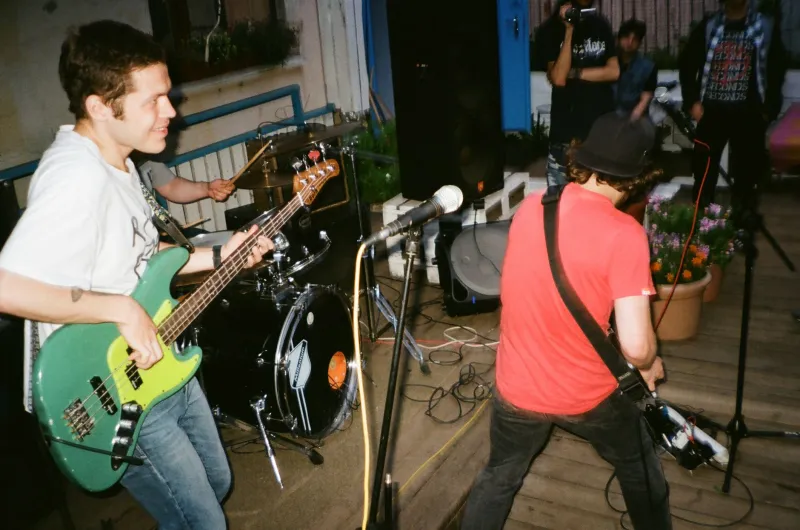
What always set Anamanaguchi apart — even within a chiptune scene that had no shortage of talented artists — was the band format. Most chiptune performance in 2009 was solo work: one person, one or two pieces of hardware, the intimate relationship between artist and machine. Anamanaguchi blew that framework up by adding live guitar, bass, and drums to the NES chip sounds.
The result wasn't chiptune with a band backing it up. It was something genuinely new — a fusion that drew equally from pop-punk energy and 8-bit aesthetics, creating music that could soundtrack a basement show in Williamsburg just as easily as it could soundtrack a video game. The live show, consequently, hit differently than almost anything else on the PulseWave circuit. There was a physicality to it. A volume. A chaos.
For a crowd that had grown up going to rock shows and had found their way into chiptune through the internet, Anamanaguchi felt like a homecoming and a revelation at the same time.
Talking Animals: The Theme That Wasn't
The URL for this show references "talks animals" — and while the exact context has been lost to the informal archiving that characterized underground music documentation in 2009, it speaks to the kind of playful, absurdist energy that PulseWave events often embraced in their branding and presentation.
The chiptune scene, perhaps more than any other musical underground of that era, was deeply comfortable with whimsy. These were artists who made serious, sophisticated music on hardware associated with childhood entertainment. The aesthetic dissonance was the point. Animal imagery, pixel art creatures, the whole vocabulary of early video games — these weren't ironic accessories. They were the native visual language of a community that had grown up inside them.
Whatever the "animals" reference meant for this specific night, it fit. Anamanaguchi's music has always had a feral quality — organized chaos, precision wrapped in noise, something that sounds like it's about to spin out of control and never quite does.
Paris and Notendo: The Supporting Cast That Wasn't Supporting
One of PulseWave's consistent strengths as a booking operation was its refusal to treat opening acts as filler. Every artist on a PulseWave bill was there because they belonged there — because their music added something to the conversation the night was having with itself.
Paris, who appeared on multiple PulseWave lineups throughout 2009, brought a melodic sensibility that served as a kind of emotional palette cleanser — music that was technically sophisticated but wore its complexity lightly, never letting the geekery get in the way of the feeling.
Notendo — a name that tells you everything you need to know about the aesthetic allegiances at play — brought something rougher, more lo-fi in its intentionality. If Anamanaguchi represented chiptune's rock crossover potential, Notendo represented its avant-garde wing: music that wasn't trying to meet anyone halfway, that existed fully in its own frequency.
The contrast made the night richer. This is what a well-assembled bill does — it creates a conversation between sets, a through-line the audience follows even without being told to.
The Room Itself
PulseWave's venue choices in 2009 were always deliberate. The Lower East Side locations, the intimate capacities, the sound systems that were better than they had any right to be given the venue sizes — all of it contributed to an atmosphere that was simultaneously underground and professional.
For the November Anamanaguchi show, the room was packed in that specific way that NYC music venues get packed when word has spread just enough but not too much. The people there wanted to be there. They'd made choices to be there. They'd turned down other options, navigated the subway, paid the cover, and arrived ready.
That energy — the energy of a room full of people who've actively chosen to be present — is the thing that separates a good show from a great one. You can't manufacture it. You can only create the conditions for it and hope.
PulseWave, on November 20, 2009, created exactly the right conditions.
What Came After
Within a couple of years, Anamanaguchi would score Scott Pilgrim vs. the World: The Game — a soundtrack that introduced their sound to millions of people who'd never heard the word chiptune. The game became a cult classic. The soundtrack became one of the most celebrated video game scores of its era. The band became, by any reasonable measure, famous.
But the people who were in that room in November 2009 knew something before the world did. They heard it first. They danced to it first. They stood in a small venue in lower Manhattan and felt the future arriving in real time.
That's what PulseWave gave New York: not just shows, but moments of genuine first contact. Nights where the underground and the incoming were the same thing, and you were lucky enough to be standing in the room when it happened.