When the Lights Come Up, the Real Party Finds Another Room
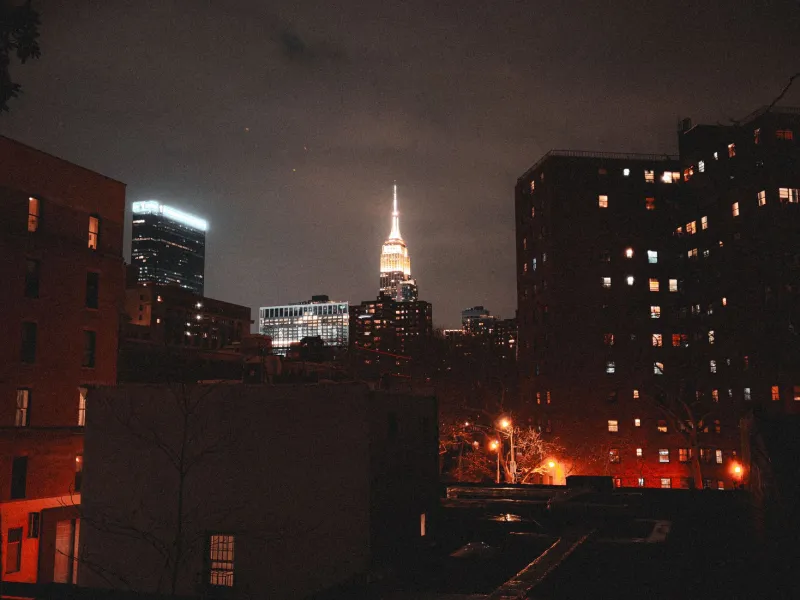
There's a specific kind of person you'll spot around 3:45 a.m. on a Saturday in New York. They're not hailing a cab. They're not scrolling for a diner. They're standing just outside the venue — coat half-on, phone face-down in their pocket — waiting for a text that hasn't arrived yet but absolutely will. They've done this before. They know the rhythm. And they know that whatever just happened inside the club was, at best, the opening act.
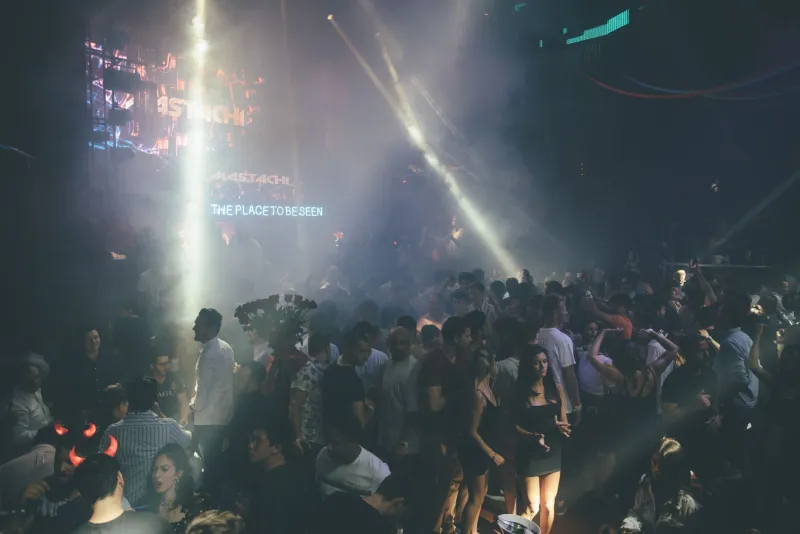
New York's official nightlife has closing times. New York's actual nightlife does not.
The Continuation Is the Culture
Ask anyone who's been deep in the city's scene for more than a few years and they'll tell you the same thing: the most memorable nights rarely happened in a licensed venue. They happened in the apartment three floors above the venue. On the rooftop of a building nobody technically had access to. In a parking garage in Bushwick that someone had strung with work lights and a single Pioneer mixer. In a Greenpoint loft where the host had been awake for thirty-six hours and was somehow still the most gracious person in the room.
This unofficial second city — the one that springs to life precisely when the bouncers start herding people toward the exits — has its own geography, its own social codes, and its own cast of characters who've spent years quietly maintaining it. It doesn't have a Yelp page. It doesn't run Instagram ads. It runs on trust, on reputation, and on the kind of mutual recognition that passes between two people who've both stayed until 6 a.m. enough times to know what that says about each other.
"Closing time is when the room self-selects," says one longtime Brooklyn promoter who asked to be identified only by her DJ name. "Everyone who was there for the spectacle leaves. Everyone who was there for the music starts asking what's next."
The Architects of the After
The people who organize these continuations occupy a strange and underappreciated corner of New York nightlife. They're not exactly promoters — there's rarely a flyer, rarely a cover charge, rarely even a confirmed guest list. They're more like... curators of momentum. People who've built enough goodwill, enough space, and enough of a reputation for good judgment that when the night needs somewhere to go, it goes to them.
Some of them have been doing this for decades. There's a generation of New Yorkers who remember the after-hours spots of the late '90s and early 2000s — the Paradise Garage afterglow, the loft parties that filled the vacuum left by clubs that got shut down — and who quietly carried that tradition forward through every rezoning, every noise complaint, every pandemic-induced pause. The format changed. The spirit didn't.
What they've built isn't a business. It's more like a living archive of what New York nightlife can be when it's freed from the constraints of liquor licenses and fire codes and 4 a.m. mandates. It's messy and it's impermanent and it's exactly as magical as that sounds.
What Gets Said After the Music Stops
There's a social alchemy that happens in the continuation that simply doesn't occur inside the official venue. The volume drops. The crowd thins. People who spent three hours standing next to each other on a dance floor without exchanging a word suddenly find themselves having the most honest conversation they've had in months.
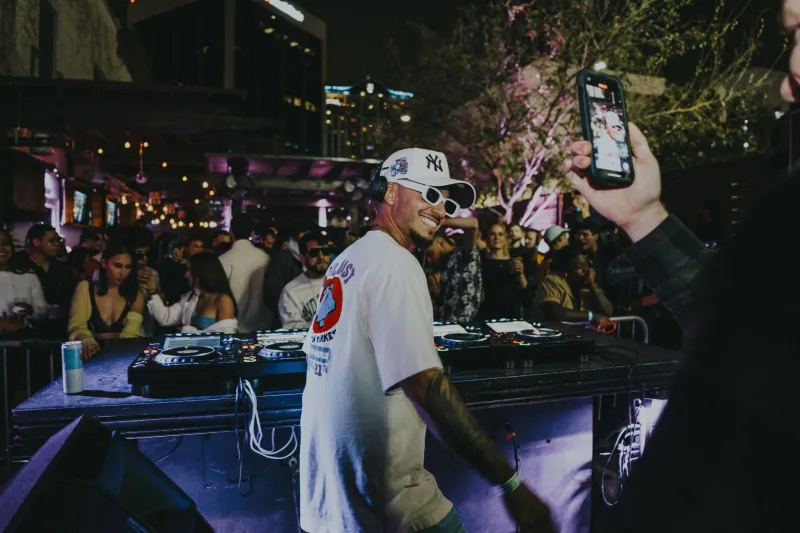
Artists talk about this constantly — the after is where the real connections get made. A producer meets the vocalist they've been trying to reach for two years. A booker finally gets twenty minutes with the artist their venue has been trying to land. A young DJ who just played their first real set finds themselves getting an unscheduled masterclass from someone who's been doing this since before they were old enough to get into a club.
None of that happens on the main floor at midnight. It happens in a kitchen at 5 a.m., over whatever's left in someone's refrigerator, with the sun starting to suggest itself through a gap in the curtains.
The Unspoken Rules
For all its apparent spontaneity, the continuation runs on a fairly strict internal logic. You don't bring strangers without vouching for them — hard. You don't document without asking — ever. You contribute something, whether that's a bottle, a playlist, a willingness to help carry equipment back down four flights of stairs at 7 a.m. And you read the room: when the energy shifts from expansive to intimate, you either downshift with it or you make your exit gracefully.
These aren't written rules. Nobody hands you a pamphlet. But violate them and you'll find that the texts stop coming, and you'll spend future Saturday mornings wondering why your 4 a.m. feels like a dead end while everyone else seems to be somewhere better.
"The after-party is a meritocracy of presence," one veteran of the scene put it to me, with the kind of certainty that comes from having been on both sides of that equation. "You earn your way in by being the kind of person people want around when the performance is over."
Why This Matters Beyond the Party
It's tempting to frame all of this as pure hedonism — and sure, some of it is. But the continuation serves a deeper cultural function in a city that's spent the last two decades watching its creative infrastructure get priced, regulated, and developed out of existence.
When venues close and rents rise and the DIY spaces that once incubated New York's most interesting art get converted into luxury condos, the continuation is what keeps the connective tissue alive. It's where the community that would otherwise scatter maintains its coherence. It's where the next generation of artists, organizers, and tastemakers gets mentored in real time, informally, by the people who built what came before them.
This city has a documented history of losing its most vital cultural spaces and somehow regenerating anyway — not because institutions saved it, but because people refused to let the energy dissipate. The after-party, in all its chaotic, undocumented, unlicensed glory, is that refusal made flesh.
The Night That Doesn't End
By the time the actual morning arrives — not the 4 a.m. fake-morning, but the one with full daylight and bodega coffee and the sound of the city shifting into its daytime register — the people who stayed will have lived through something that's genuinely hard to describe to anyone who wasn't there.
That's the point, really. New York's nightlife has always derived part of its power from being present-tense, from being something you had to be in to understand. The continuation is the purest expression of that. No tickets, no algorithm, no recap thread. Just the city doing what it does when the official version of itself has gone to sleep.
Closing time, in New York, has always been a suggestion. The people who treat it as an invitation — those are the ones keeping the real pulse of this city beating.