After the Bass Drops, the Kitchen Opens: NYC's Sacred Late-Night Eating Rituals
After the Bass Drops, the Kitchen Opens: NYC's Sacred Late-Night Eating Rituals
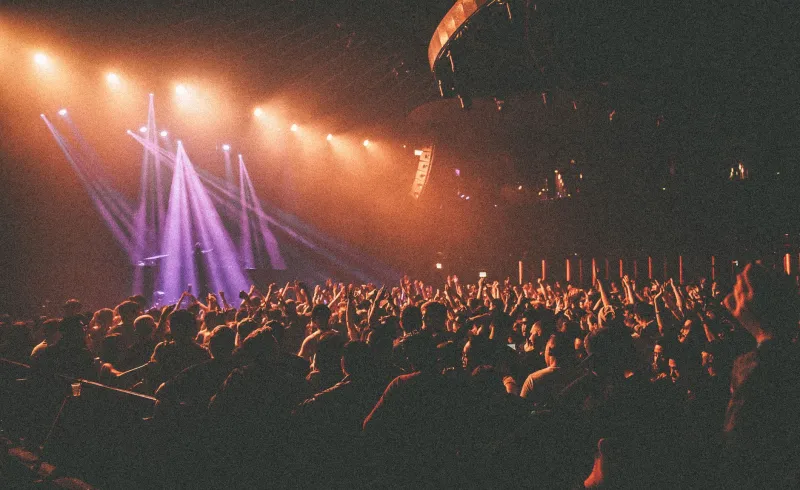
There's a moment every New York night reaches — somewhere between the last call and the first hint of blue light creeping over the East River — when the music stops but nobody's quite ready to go home. The crowd spills out onto the sidewalk, ears still ringing, feet still moving in little involuntary half-steps. Someone says I'm starving and suddenly the whole group has a new destination.
The 2 AM meal isn't just food. In this city, it's a ritual. It's the encore nobody put on the flyer.
Koreatown Never Sleeps (And Neither Do You)
If you've ever stumbled off the R train onto 32nd Street after midnight, you already know what we're talking about. Koreatown — that dense, luminous corridor of neon signs and restaurant stairwells between Fifth and Sixth Avenues — operates on a schedule that seems almost designed for the nightlife crowd. Many of the Korean BBQ spots here run 24 hours, or close enough to it that the distinction barely matters at 2:30 in the morning.
There's something almost ceremonial about the way a post-club table settles into a Koreatown grill. Coats get piled on chairs. Someone orders the marinated short ribs. Someone else gets the spicy pork belly. The table fills with banchan — little dishes of kimchi, pickled vegetables, fish cake — and for a minute, the conversation drops into this comfortable, food-focused silence while everyone figures out what to do with the tongs. Then it comes back louder than before.
DJs and bartenders who work the late shift in Midtown and Hell's Kitchen have been gravitating here for years. It's not just the hours. It's the format — communal, hands-on, loud enough that you can keep the energy of the night alive without trying too hard. You're still out. You're just also eating.
The Bodega Counter as Nightlife Institution
Over in Williamsburg and Bushwick, the ritual looks different but feels just as intentional. Here, the late-night food scene is less about sit-down restaurants and more about knowing which bodega has a guy behind the deli counter who actually cooks.
These places don't advertise. They don't have Yelp pages worth reading. What they have is a loyal, rotating cast of regulars — the bartender from the venue two blocks over who comes in every Saturday around 2:15, the record store clerk who DJs on weekends, the dancers who just wrapped a four-hour set at a warehouse party and need something real before the L train takes them home.
The sandwiches here are enormous and slightly chaotic — whatever's behind the glass, built fast, wrapped in foil that crinkles when you peel it back. People eat them standing at the counter or perched on a milk crate outside. Conversations happen. Numbers get exchanged. Someone finds out that the person next to them was at the same show, just in a different corner of the room.
This is community formation happening in the most unglamorous possible setting, and somehow that's exactly why it works.
Why the 2 AM Table Hits Different
There's a social science concept — loose and informal, the kind that gets debated over late-night food rather than in academic papers — about how shared meals accelerate intimacy. You trust people differently after you've eaten with them. The defenses that hold through a whole night of dancing and small talk have a way of softening when the food arrives.
For New York's nightlife workers especially, the post-shift meal carries a specific weight. Bartenders who've been on their feet since 8 PM, bouncers who've spent hours managing crowd energy, coat check staff who've catalogued a hundred strangers' belongings — when these people finally sit down together at 3 AM, the meal is almost decompression therapy. It's the part of the night that belongs to them.
Some of the most enduring friendships and creative partnerships in New York's music and arts scene were forged not in the venue, not in the green room, but at a diner booth or a food cart or a 24-hour ramen spot where everyone ended up after the show. The venue is where you meet. The meal is where you actually talk.
The Spots That Get It Right
Across the five boroughs, certain places have earned their place in the unofficial late-night canon.
In the East Village, a handful of diners have been feeding post-show crowds since before most of today's clubgoers were born. The lighting is harsh, the menus are laminated and enormous, and nobody is going to rush you. Order the eggs. Order the pancakes. Order both. Stay for two hours if you want.
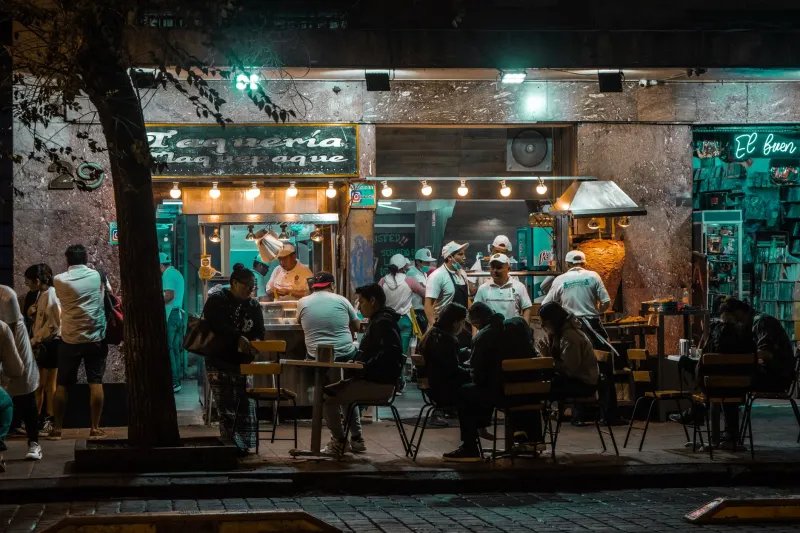
In Jackson Heights, the late-night South Asian food corridor along Roosevelt Avenue operates in its own timezone entirely — biryanis and kebabs and chai served out of storefronts that glow warm against the elevated train tracks overhead. The 7 train crowd and the nightlife crowd overlap here more than people expect.
In Harlem, soul food spots that have been anchoring the neighborhood for decades do a quiet but steady late-night trade. The macaroni and cheese at 2 AM after a night of live jazz on 125th Street is not a small thing. It is, in fact, a very large thing.
The Meal as Finale
Here's the thing about New York nightlife that the venue guides and the DJ lineups don't quite capture: the night rarely ends where it's supposed to. The club is the main event, sure, but the city has this way of extending the experience past every logical stopping point.
The 2 AM meal is how the night finally exhales. It's the unscheduled, unsponsored, algorithm-proof part of the evening that happens because people aren't done with each other yet. Because the music is still living somewhere in the body and needs a little more time before sleep makes sense.
Every plate of food shared at that hour is a small act of collective refusal — a refusal to let the night become just a memory before it's ready to be one.
In a city that moves this fast, that means something. Eat slow. Stay a little longer. The rest of the world is already asleep.