The Price of Cool: How New York's Underground Venues Became Premium Products
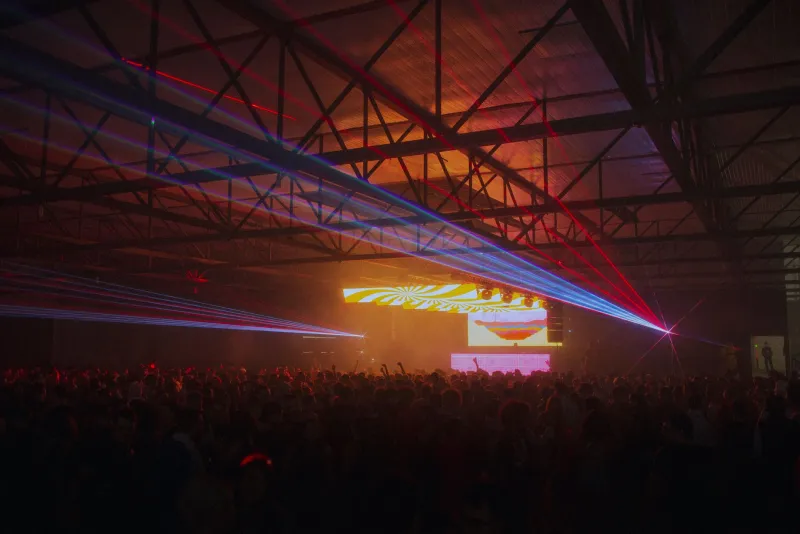
There was a bar in Ridgewood that nobody could quite agree on the name of. Locals called it three different things. It had no sign, no website, and a sound system that had been assembled by someone who clearly cared more about sub-bass than fire code compliance. On a good Saturday night, it was one of the greatest rooms in New York City. On a bad one, it was a slightly damp basement with excellent music.
It's a co-working space now.
This story — the underground venue that gets discovered, celebrated, gentrified, and eventually erased or transformed beyond recognition — has become so familiar in New York nightlife that it barely registers as news anymore. But the current wave of transformation feels qualitatively different from previous cycles. What's happening now isn't just displacement. It's conversion. The aesthetic of underground culture is being preserved while everything that made it actually underground gets quietly stripped out.
The Playbook
The process follows a recognizable pattern. A venue opens in an outer borough neighborhood that's in the early stages of gentrification — Bushwick five years ago, parts of the South Bronx more recently. It builds a reputation through word of mouth, a genuinely low barrier to entry, and programming that prioritizes musical integrity over marketability. The crowd is mixed in the best sense: artists, workers, immigrants, longtime residents, a handful of transplants who found the place before the algorithm did.
Then the coverage comes. A magazine piece. A viral Instagram post. A mention in a travel guide aimed at culturally curious visitors from out of town. Suddenly the venue is on a list, and the crowd changes.
Venue owners face a choice at this point. They can try to maintain their original identity at the cost of turning away business — which is genuinely difficult when your lease just went up. Or they can lean into the attention, raise the cover, add a cocktail program, and reposition the space as an "experience destination" for the kind of high-disposable-income crowd that now knows the neighborhood exists.
The second option pays the bills. The first one usually doesn't.
What Gets Lost in Translation
"The thing that made those rooms special was accessibility," says Tanya Ferreira, a longtime Brooklyn nightlife figure who has worked in various capacities at venues across the borough. "Not just the price, though that matters. It was the whole atmosphere — you didn't feel like you had to perform. You could show up in whatever, dance badly, be a beginner. The room wasn't optimized. That's what made it free."
When a venue gets optimized — when the lighting gets better, the staff gets trained to upsell, the cover charge gets tiered, and the booking strategy shifts toward names that will drive Instagram impressions — something fundamental changes even if the physical space looks identical. The room stops being a place where culture happens and starts being a place where culture is consumed.
The distinction matters enormously for the communities that built those scenes in the first place. Black and Latino nightlife communities in New York have watched this process play out repeatedly — spaces they created, sounds they developed, aesthetics they originated get packaged and resold to wealthier, whiter audiences at price points that exclude the originators.
"It's not subtle," says DJ and community organizer Marcus Webb, who has been documenting venue closures in Brooklyn for the past several years. "You watch a room that was 80% Black on a Saturday night become 80% white within two years of getting 'discovered,' and the cover went from ten dollars to forty, and the music is technically the same genre but it's been sanded down. That's not gentrification as metaphor. That's just gentrification."
The Luxury Underground (An Oxymoron That Somehow Exists)
The most disorienting development in recent years is the emergence of what might be called the luxury underground — venues that deploy every signifier of countercultural authenticity while operating at a price point and exclusivity level that would've been unimaginable in the scenes they're mimicking.
Think: exposed brick and no-sign exteriors, but with a $65 cover and a bottle service option. Think: "members only" framing that evokes exclusivity without the artistic curation that made actual underground spaces selective. Think: DJ lineups curated for credibility but marketed to finance-industry attendees on expense accounts.
These spaces aren't fraudulent, exactly. The music is often genuinely good. The production values are high. But they've essentially commercialized the experience of feeling like you're somewhere special without creating the conditions that make spaces actually special.
Where the Underground Actually Went
The good news — and there is good news — is that underground culture in New York has always been adaptive. Every time a wave of gentrification closes off one neighborhood, the scene migrates and reconstitutes somewhere else, usually somewhere cheaper, usually somewhere the cultural mainstream hasn't reached yet.
Right now, that migration is taking the scene further out than it's gone in recent memory. Parts of East New York and Canarsie in Brooklyn. Sections of the South Bronx that have maintained their affordability. Outer Queens neighborhoods that haven't yet attracted the real estate attention that consumed Astoria and Sunnyside. Even parts of Staten Island, which has a genuinely underrated underground music community that barely gets acknowledged in mainstream nightlife coverage.
These spaces are harder to find. They're less likely to be on any list. They don't have a PR strategy or a branded cocktail. And that's exactly the point.
The velvet rope was replaced by the algorithm. The algorithm got gamed by capital. And so the underground went somewhere the algorithm hasn't found yet. It always does.
If you want to find it, you already know you're not going to find it on a website.