Three Days to DJ: The PulseWave Night That Made Learning the Craft Feel Revolutionary
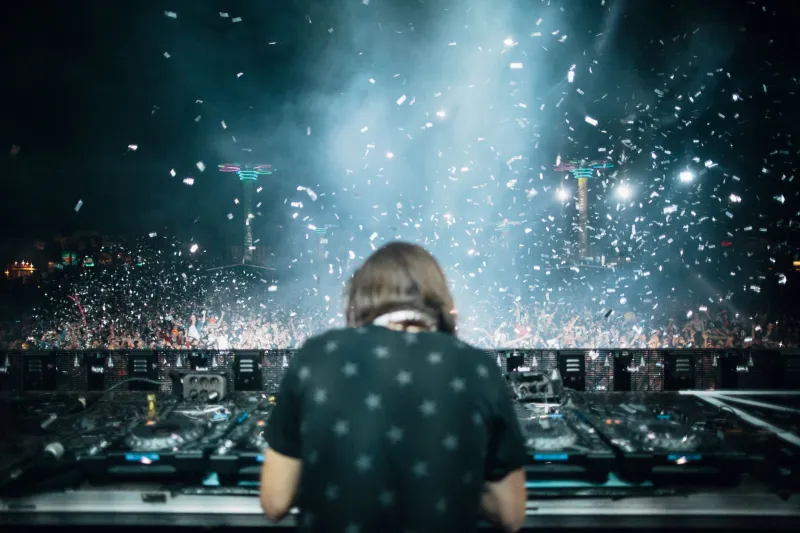
Somewhere in the middle of a PulseWave lineup from April 25, 2009, there's an act with a name that functions as its own manifesto: Je Deviens DJ en 3 Jours. For the non-French speakers in the room — and given the NYC crowd, there were plenty — that translates to "I'm Becoming a DJ in 3 Days."
In three words (and a number), the act's name captured something essential about the moment chiptune and experimental electronic music were living through in the late 2000s. The barriers to entry were collapsing. The gatekeepers were losing their grip. And a generation of artists was deciding, loudly and collectively, that the credential of "DJ" or "musician" or "producer" wasn't something you waited to be given — it was something you claimed.
The April 25 PulseWave show, which also featured Larry, Dr. Von Pnok, Realmyop, Paris, and Treantafeles, was a perfect encapsulation of that spirit.
The Name Is the Argument
Let's sit with Je Deviens DJ en 3 Jours for a moment, because it deserves it.
The name is funny, yes. It's got that self-aware, slightly absurdist quality that characterized a lot of the chiptune and netlabel scene's branding in this era. But underneath the joke is a genuine provocation. What does it take to become a DJ? Is it years of practice? A certain kind of equipment? The approval of an existing scene? Or is it simply the decision to do it?
In 2009, that question was being answered in real time — and the answer the underground was arriving at was: you just do it. You pick up the hardware, or the software, or the Game Boy, or the laptop, and you make music, and you perform it, and you are what you say you are.
This democratization of music-making was, depending on who you asked, either the most exciting development in popular music in decades or the death of craft. The chiptune scene, characteristically, didn't have much patience for the doom-and-gloom interpretation. These were people who'd been making music on hardware that cost twenty dollars at a thrift store. They'd been distributing it for free on the internet before streaming existed. They'd been booking their own shows and building their own audiences without the infrastructure of the music industry.
Three days to become a DJ? Sure. Why not. Watch me.
Larry and Dr. Von Pnok: The Names That Demand Investigation
A PulseWave lineup was never just a list of performers — it was a collection of personas, each one a small act of identity construction in a scene that valued creative self-presentation as much as musical output.
Larry — the name so understated it becomes surreal in this context — brought a kind of deadpan energy that worked as a perfect counterpoint to the more overtly eccentric billing around it. In a scene full of elaborate aliases and pixel-art avatars, going by Larry is its own kind of statement.
Dr. Von Pnok, meanwhile, sits at the opposite end of the naming spectrum: theatrical, slightly absurd, wearing its constructed character openly. The "Dr." prefix in underground music has a long tradition — it implies expertise, authority, and a winking awareness that expertise and authority are partly performance. In the context of a night that included an act literally named after the speed of learning to DJ, Dr. Von Pnok's title felt both earnest and ironic simultaneously.
This is the thing about scenes like this: the humor and the sincerity aren't opposites. They coexist, productively, in the same space.
Realmyop and the Digital Native Aesthetic
Realmyop — another fixture of the broader chiptune and experimental electronic community in this period — represented the generation of artists who'd grown up entirely inside digital culture. For whom the internet wasn't a new thing but the native environment. For whom making music on a computer wasn't a workaround but the obvious, natural approach.
In 2009, that generational shift was still new enough to be notable. The older figures in electronic music had histories in analog synthesis, in physical media, in pre-internet distribution. Realmyop and artists like them carried none of that history as weight — they were building something new, unencumbered by the way things had been done before.
Live, this translated to a kind of freedom in the performance. No reverence for convention. No nostalgia for equipment they'd never used. Just the music, the moment, and the room.
Paris and Treantafeles: The Connective Tissue
By April 2009, Paris and Treantafeles had become something like the connective tissue of the PulseWave community — artists who appeared regularly enough to feel like part of the institution itself, whose presence on a bill signaled a certain quality and commitment to the scene's values.
Paris brought melodic sophistication and a warmth that balanced the more abrasive or conceptually challenging work around it. Treantafeles brought live energy and a physicality that reminded everyone in the room that this music, however rooted in digital tools, was still a human thing — still made by a person, for people, in a shared space.
That reminder matters more than it might seem. One of the persistent criticisms of electronic and computer-based music performance is its perceived coldness — the sense that there's a barrier between the artist and the audience that analog instruments don't create. PulseWave, and artists like Treantafeles specifically, worked hard to dissolve that barrier. Not by pretending the technology wasn't there, but by being so fully present within it that the technology became irrelevant.
What April 25, 2009 Was Really About
Every scene has nights that function as mirrors — events that reflect the community's values back at itself clearly enough that everyone in the room can see what they're part of. The April 25 PulseWave show was one of those nights.
The lineup, from the deliberately ordinary (Larry) to the theatrical (Dr. Von Pnok) to the philosophically provocative (Je Deviens DJ en 3 Jours), told a story about a community that took music seriously without taking itself too seriously. That made space for craft and for chaos. That believed the best thing you could do with a skill was share it — and that the best thing you could do with a door was open it.
Three days to become a DJ. It's a joke. It's also, in the best possible way, completely true.