The Midnight Cliff: How the Subway's Curfew Is Quietly Killing New York's Night Economy
The Midnight Cliff: How the Subway's Curfew Is Quietly Killing New York's Night Economy
New York City doesn't sleep — or so the story goes. The slogan is stitched into the city's mythology so deeply that questioning it feels almost unpatriotic. But spend enough nights in this city's clubs, bars, and music venues, and a different truth emerges around 1:45 a.m., when the crowd starts checking phones, doing mental math, and quietly calculating the last possible moment to leave before the trains become a gamble.
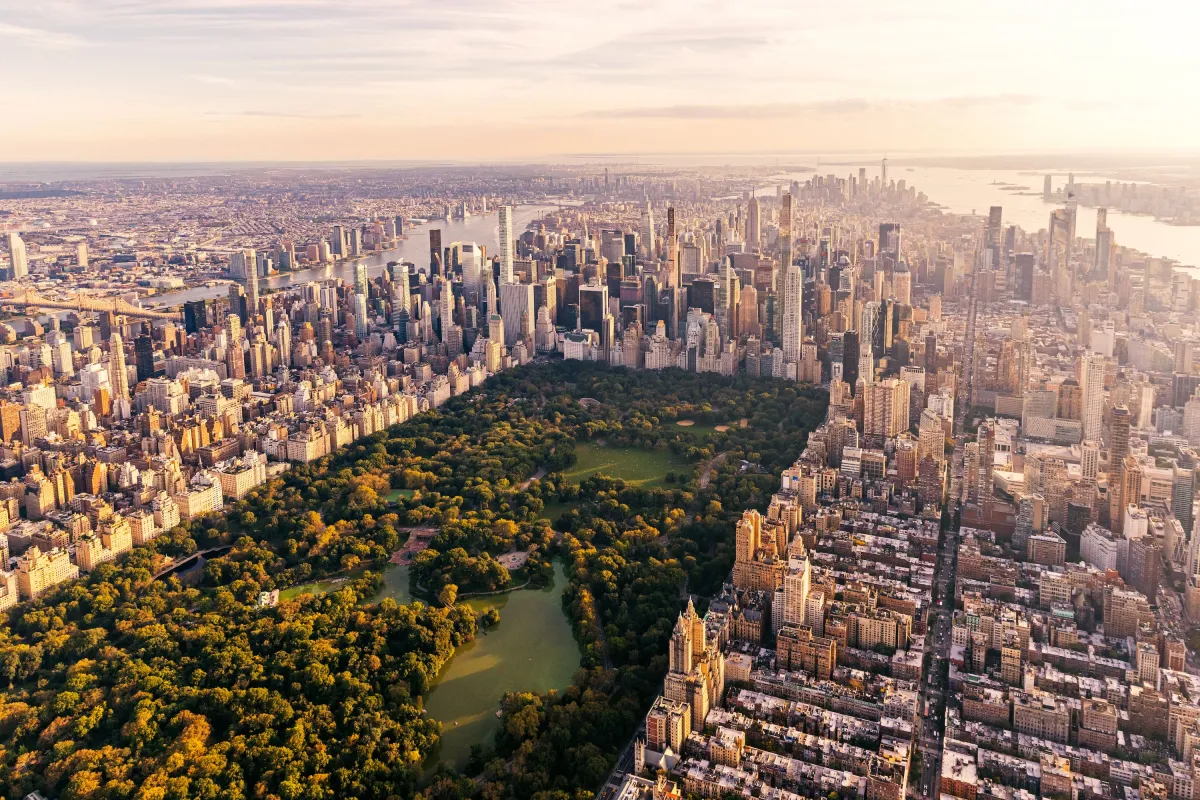 Photo: New York City, via media.architecturaldigest.com
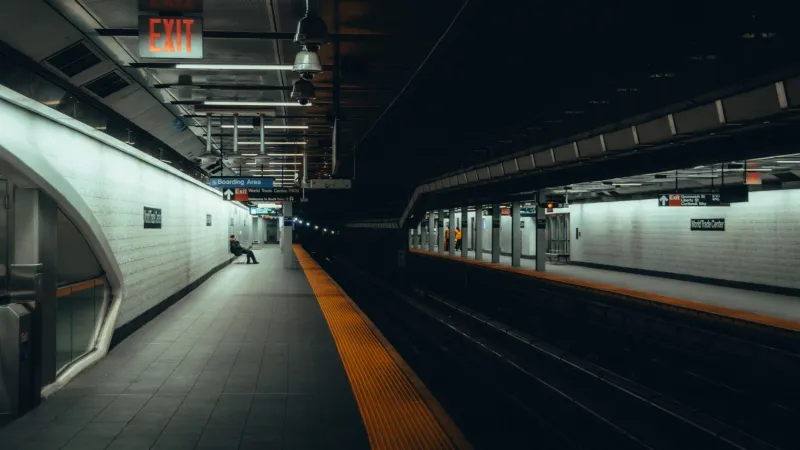
The subway doesn't actually stop running after 2 a.m. But for all practical purposes — with service reduced to a trickle, wait times stretching past 30 minutes, and certain lines essentially shutting down for overnight maintenance — it might as well. And that gap between myth and reality is costing New York City something it can't easily quantify: its soul as a nightlife destination.
The 2 A.M. Exodus
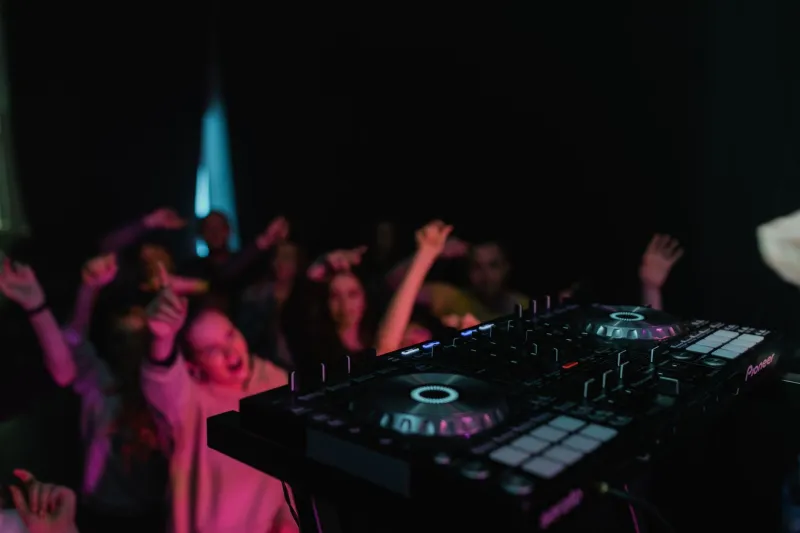
Ask anyone who works in New York nightlife and they'll describe the same phenomenon without prompting. Around 1:30 a.m., the energy in a room shifts. Not because the music gets worse or the crowd gets tired — but because people start doing logistics. Rideshares surge. Ubers pool in clusters outside venues. The people who live in outer-borough neighborhoods without reliable late-night service start heading for the door.
"I watch the room empty in real time starting at 1:45," says Dominique Ferreira, who books talent for a mid-sized club in Bushwick. "It doesn't matter who's playing. It doesn't matter if the set is incredible. People have jobs. They can't wait 45 minutes for an F train at 3 a.m."
This isn't a vibe problem. It's a structural one. And it shapes nearly every decision made in the New York nightlife ecosystem — from set times to booking fees to which neighborhoods can sustain late-night culture at all.
What London and Berlin Understand That We Don't
The comparison to other world-class nightlife cities is uncomfortable but necessary. Berlin's U-Bahn and S-Bahn run 24 hours on weekends. London's Tube, after years of advocacy, now operates overnight service on key lines Friday and Saturday nights. The result in both cities isn't just convenience — it's a fundamentally different relationship between residents and late-night culture.
In Berlin, clubs routinely don't hit their stride until 4 or 5 a.m. The night is a long, unhurried thing. Crowd dynamics build slowly. Artists can perform later, play longer, take more risks. The absence of a transit deadline removes a kind of low-grade anxiety that shapes how people experience nightlife — often without realizing it.
In London, the introduction of the Night Tube in 2016 was directly linked to measurable economic benefits. Studies conducted in the years following its launch estimated that the overnight service contributed hundreds of millions of pounds annually to the city's night-time economy. Businesses in areas served by Night Tube lines reported increased revenue. Late-night employment grew.
New York, which built the subway system that inspired half the world's transit networks, lags behind both cities in this regard. The irony would be funny if it weren't so expensive.
Who Pays the Price
The transit gap doesn't hurt everyone equally. That's the part of this conversation that deserves more attention.
People who live in Manhattan — particularly in neighborhoods well-served by multiple lines — experience a version of New York nightlife that's relatively insulated from the last-train problem. They can walk home, or the wait for a train is short enough to manage.
But nightlife workers — bartenders, security staff, coat check employees, sound engineers — often live in the outer boroughs. They finish their shifts at 4 or 5 a.m. and face commutes that can stretch past an hour in the best conditions. For these workers, unreliable late-night transit isn't an inconvenience. It's a safety issue and a financial one.
Then there's the performer side. "I've had to turn down gigs in New York because the logistics don't work," says one touring DJ who asked not to be named. "I'm not from here. If I finish at 4 a.m. and I can't get back to my hotel without a $60 Uber, that affects how I think about taking the booking in the first place."
Neighborhood Winners and Losers
The transit gap also shapes which parts of the city can sustain vibrant late-night scenes — and which get quietly left behind.
Manhattan neighborhoods near major 24-hour lines maintain some insulation. But the migration of nightlife to Brooklyn and Queens over the past decade — driven by cheaper rents and more available space — has created a geographic mismatch between where the culture lives and how accessible it is after midnight.
Ridgewood, Maspeth, East Williamsburg — these are neighborhoods that have become genuine nightlife hubs. But they're also neighborhoods where late-night transit service is thin at best. The result is a nightlife ecosystem increasingly dependent on rideshare companies whose surge pricing functions as a de facto cover charge on top of the actual cover charge.
"Uber and Lyft are making more money off New York nightlife than most of the venues," Ferreira says, and she's probably not wrong.
The Bold Thing Nobody Wants to Say
Here it is: New York City cannot credibly call itself a world-class nightlife destination while operating a transit system that functionally shuts down during the hours when nightlife actually peaks.
The fix isn't simple — it involves funding, labor negotiations, infrastructure, and political will. But the conversation has to start with honesty about what the current system costs. It costs venues customers. It costs workers safety. It costs performers incentive. And it costs the city a piece of its identity that, once lost to more transit-friendly competitors, may not come back.
A genuine Night Subway initiative — reliable, frequent service on core lines between 2 and 6 a.m. on weekends — would be transformative. Not just for the people who love to dance, but for the broader night-time economy that employs hundreds of thousands of New Yorkers.
The city that never sleeps deserves transit that doesn't, either.
The Last Word
Every night, somewhere in Brooklyn or Queens or the Bronx, someone is leaving a show early. Not because they want to. Because the city's infrastructure has decided, quietly and without announcement, that their night is over.
That's not the New York we were promised. And it's not the New York we should settle for.
— PulseWave NYC